In the realm of web development, understanding how HTTP responses work, particularly regarding cookies, is crucial for Symfony developers. This knowledge is vital not just for a smooth user experience but also for your Symfony certification exam.
What Are HTTP Responses?
An HTTP response is a message sent by a server in response to a client's request. It contains the status of the request and can optionally include headers, body content, and cookies.
HTTP responses play a significant role in the behavior of web applications. They allow developers to manage sessions, personalize user experiences, and maintain state across multiple requests.
The Role of Cookies in HTTP Responses
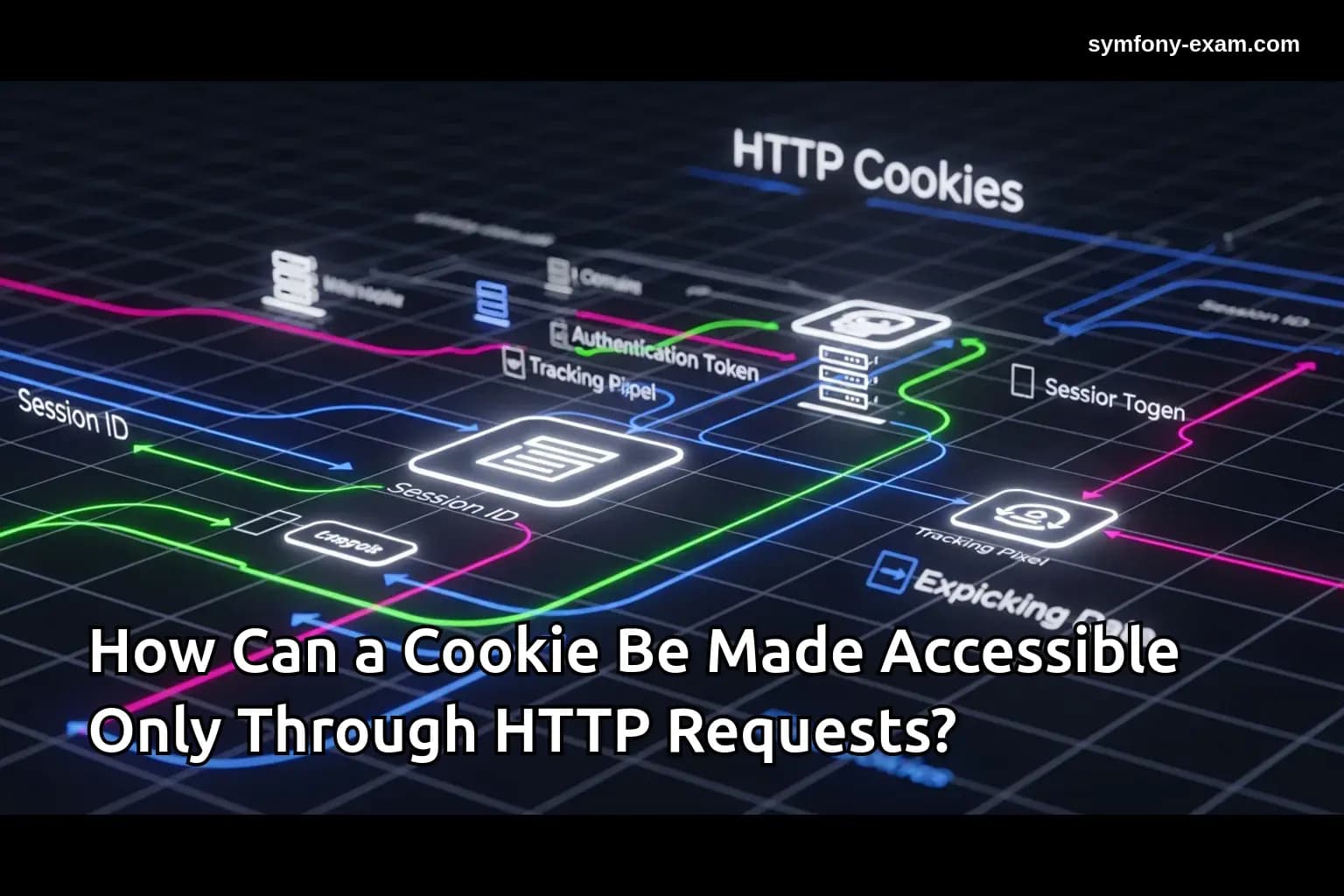
Cookies are small pieces of data stored on the client-side, sent from the server to the client and back. They serve various purposes, including maintaining user sessions, storing preferences, and tracking user behavior.
For Symfony developers, understanding how to manipulate cookies in HTTP responses is essential. It allows for session management and improves user experience significantly.
Setting Cookies in Symfony
To set a cookie in a Symfony application, you utilize the response object. Here's a practical example:
use Symfony\Component\HttpFoundation\Response;
use Symfony\Component\HttpFoundation\Cookie;

$response = new Response();
$cookie = new Cookie('user_id', '12345', strtotime('now + 1 day'));
$response->headers->setCookie($cookie);
$response->send();
In the example above, we create a new cookie named user_id with a value of 12345, which expires in one day. This cookie is then attached to the HTTP response.
Retrieving Cookies from HTTP Requests
To read cookies sent by the client in a Symfony application, you can access the request object. Here’s how you can retrieve the user_id cookie:
use Symfony\Component\HttpFoundation\Request;

$request = Request::createFromGlobals();
$userId = $request->cookies->get('user_id');
This snippet demonstrates how to access cookies from a request. It’s essential for personalizing user experiences based on previously stored data.
Practical Use Cases for Cookies in Symfony Applications
Cookies can be used in various ways in Symfony applications. Here are some scenarios:
-
User Authentication: Use cookies to store session identifiers securely.
-
User Preferences: Store user-specific settings (like themes or language preferences) in cookies for convenience.
-
Tracking User Behavior: Use cookies for analytics and tracking user interactions with the application.
Complex Conditions and Logic in Services
In Symfony, you may encounter complex conditions when working with cookies in services. For example, determining if a user should stay logged in based on a cookie can lead to intricate logic:
use Symfony\Component\HttpFoundation\Request;
use Symfony\Component\HttpFoundation\Response;

class UserService {
    public function checkUserStatus(Request $request): Response {
        $response = new Response();
        $userId = $request->cookies->get('user_id');

        if ($userId) {
            // Logic to validate the user...
            return $response->setContent('User is logged in');
        }

        return $response->setContent('User is not logged in');
    }
}
This example demonstrates how to check the existence of a cookie and implement corresponding logic, which is common in user session management.
Twig Templates and Cookie Logic
When rendering views in Twig, you might want to vary the output based on cookie values. Here’s an example:
{% if app.request.cookies.get('user_id') %}
    <p>Welcome back, User!</p>
{% else %}
    <p>Please log in.</p>
{% endif %}
This Twig template checks if the user_id cookie exists and renders different content based on its presence, enhancing the user experience.
Best Practices for Handling Cookies
When working with cookies in Symfony, consider the following best practices:
-
Use Secure Flags: Always set the
SecureandHttpOnlyflags on cookies to enhance security. -
Limit Cookie Size: Keep cookies small to avoid performance issues.
-
Clear Cookies on Logout: Ensure that cookies are cleared when users log out to protect their data.
Conclusion: The Importance of Cookies in Symfony Development
Understanding how to manage HTTP responses and cookies is crucial for Symfony developers. Mastering these concepts will not only aid in passing the Symfony certification exam but also in building robust and user-friendly applications.
For further reading, explore our blog posts on PHP Type System, Advanced Twig Templating, Doctrine QueryBuilder Guide, and Symfony Security Best Practices.
By mastering cookies in HTTP responses, you can enhance user experience and application security, two critical aspects of Symfony development.