In the realm of PHP development, understanding the relationship between abstract classes and interfaces is vital, especially for Symfony developers preparing for certification. This article dives deep into whether an abstract class can implement an interface, along with practical examples relevant to Symfony applications.
Understanding Abstract Classes and Interfaces in PHP
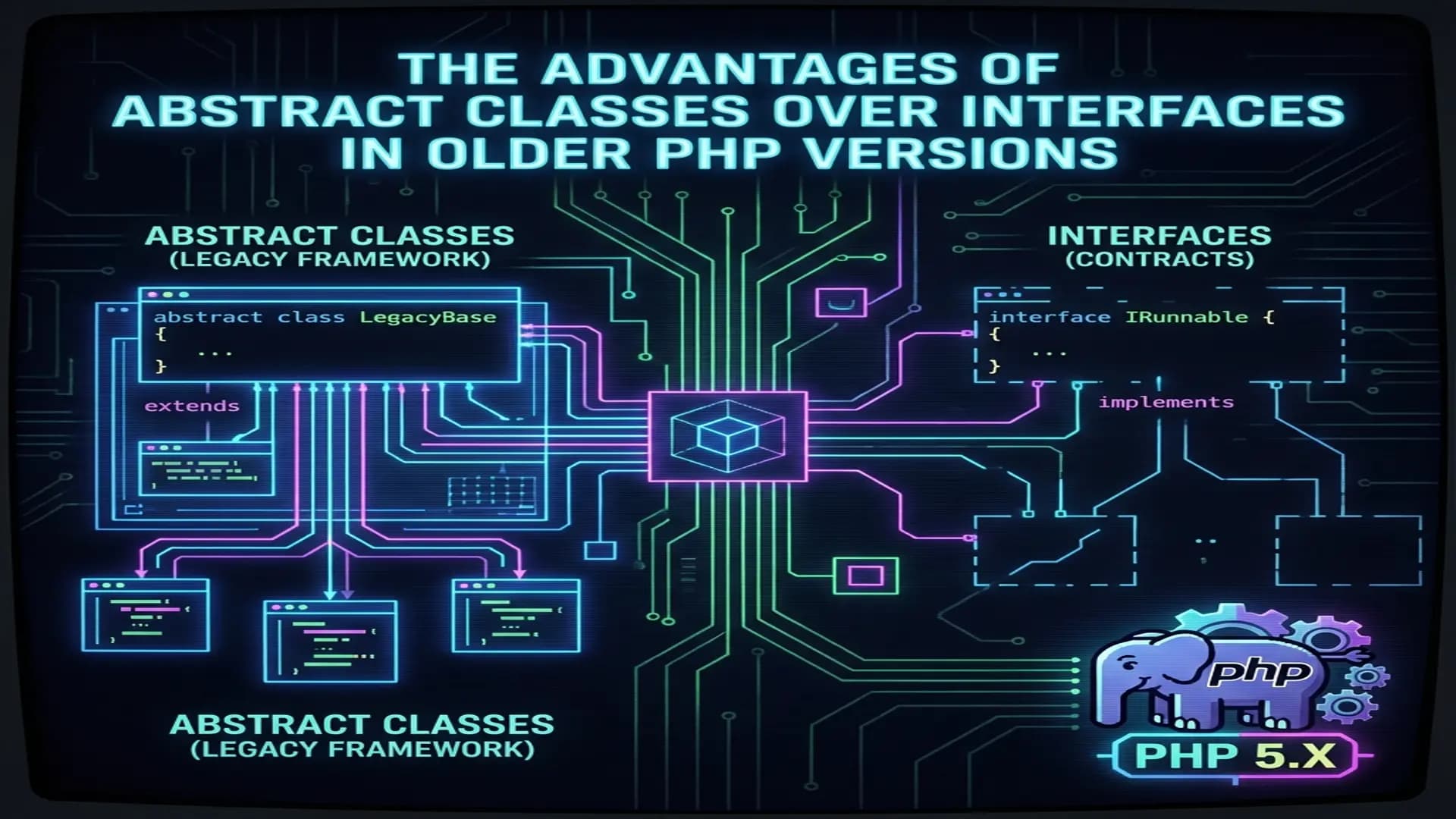
In PHP, both abstract classes and interfaces are used to define the structure of classes, but they serve different purposes. Abstract classes allow you to define methods that can be shared by derived classes while requiring some methods to be implemented by those derived classes. Conversely, interfaces define a contract that implementing classes must adhere to, without providing any implementation.
To clarify this distinction, consider the following key points:
Abstract Class: Can contain both abstract methods (without body) and concrete methods (with body). It can also have properties.
Interface: Can only declare public methods; no implementation or properties are allowed.
Can an Abstract Class Implement an Interface?
Yes, an abstract class can implement an interface in PHP. This means that the abstract class must implement all methods declared in the interface, although it can leave some methods abstract for subclasses to implement. This feature is particularly beneficial in Symfony applications where you may want to enforce a contract on multiple classes while providing some shared functionality.
Here’s an example to illustrate this concept:
<?php
interface LoggerInterface {
    public function log(string $message): void;
}

abstract class AbstractLogger implements LoggerInterface {
    protected function formatMessage(string $message): string {
        return '[' . date('Y-m-d H:i:s') . '] ' . $message;
    }
}

class FileLogger extends AbstractLogger {
    public function log(string $message): void {
        $formattedMessage = $this->formatMessage($message);
        file_put_contents('app.log', $formattedMessage . PHP_EOL, FILE_APPEND);
    }
}
?>
In this example, AbstractLogger implements the LoggerInterface. It provides a concrete method formatMessage that can be used by its subclasses, like FileLogger, which implements the required log method from the interface.
Practical Applications in Symfony
In Symfony, leveraging abstract classes and interfaces can significantly reduce code duplication and enhance maintainability. Consider a scenario where you are building a service that requires different types of logging mechanisms (e.g., file logging, database logging, etc.). By using an abstract class and an interface, you can create a flexible and extensible logging system.
For instance, if you have multiple services that log messages, they can all implement the same LoggerInterface, ensuring consistency:
<?php
class DbLogger extends AbstractLogger {
    public function log(string $message): void {
        $formattedMessage = $this->formatMessage($message);
        // Assume we have a method saveToDatabase that saves the log message
        $this->saveToDatabase($formattedMessage);
    }
}
?>
Both FileLogger and DbLogger share the formatMessage method, promoting code reuse and ensuring that all loggers adhere to the LoggerInterface contract.
Handling Complex Conditions in Symfony Services
When implementing services in Symfony, you might encounter complex conditions that require clear and maintainable code. By using abstract classes and interfaces, you can define a clear structure for your services. For example, you can create a service that processes user permissions:
<?php
interface PermissionInterface {
    public function hasAccess(User $user): bool;
}

abstract class AbstractPermission implements PermissionInterface {
    protected function checkRole(User $user, string $role): bool {
        return in_array($role, $user->getRoles());
    }
}

class AdminPermission extends AbstractPermission {
    public function hasAccess(User $user): bool {
        return $this->checkRole($user, 'ROLE_ADMIN');
    }
}
?>
The AdminPermission class can utilize the shared checkRole method, simplifying the implementation of the hasAccess method while ensuring that all permission checks conform to the PermissionInterface.
Logic Within Twig Templates
In Symfony applications, you often need to pass data to Twig templates. By utilizing interfaces and abstract classes, you can standardize the data structure. For example, you can create a data provider interface that all data providers must implement:
<?php
interface DataProviderInterface {
    public function getData(): array;
}

abstract class AbstractDataProvider implements DataProviderInterface {
    protected function formatData(array $data): array {
        // Format data before passing to Twig
        return array_map('htmlspecialchars', $data);
    }
}

class UserDataProvider extends AbstractDataProvider {
    public function getData(): array {
        return $this->formatData(['name' => 'John', 'email' => '[email protected]']);
    }
}
?>
This approach not only keeps your controllers lean but also ensures that all data returned to Twig templates is formatted consistently.
Common Pitfalls and Best Practices
When working with abstract classes and interfaces, developers often encounter common pitfalls. Here are some best practices to follow:
Best Practice 1: Always ensure that your abstract class implements all methods of the interface, unless you intend for the abstract class to be further subclassed.
Best Practice 2: Use abstract classes when you want to share code among a group of related classes. Reserve interfaces for defining contracts.
Best Practice 3: Keep your interfaces focused and cohesive. A single interface should represent a single responsibility.
Best Practice 4: Be cautious of creating deep inheritance hierarchies, as this can complicate your codebase and make it harder to maintain.
Conclusion: The Importance of Understanding Abstract Classes and Interfaces
In conclusion, understanding whether an abstract class can implement an interface in PHP is crucial for Symfony developers. This knowledge equips you with the tools to create flexible and maintainable applications. As you prepare for the Symfony certification exam, mastering these concepts will demonstrate your ability to write clean, professional code. For further reading, check out our articles on PHP Type System, Advanced Twig Templating, Doctrine QueryBuilder Guide, and Symfony Security Best Practices.
For more information on PHP interfaces, visit the official PHP documentation.