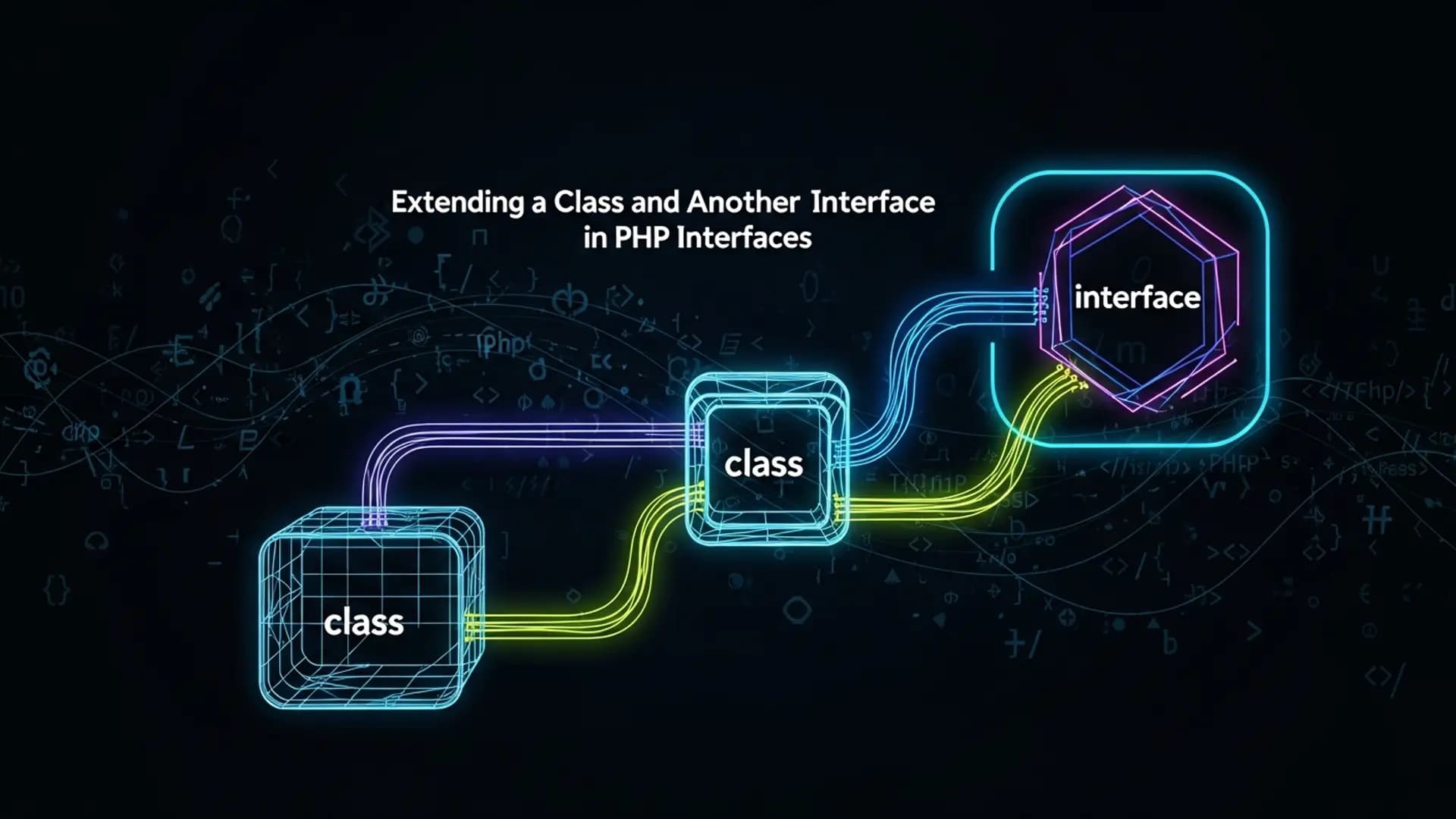
As a Symfony developer aiming for certification, understanding the nuances of extending a class and another interface within PHP interfaces is crucial. This blog post delves into this topic to provide you with a comprehensive understanding of this concept and its practical implications in Symfony applications.
Exploring Interface Extension in PHP
In PHP, interfaces define a contract that classes can implement. They specify the methods a class must implement without providing the implementation details. While interfaces can extend other interfaces, the question arises: Can an interface extend both a class and another interface simultaneously?
Let's delve into this intriguing aspect of PHP interfaces and explore its implications for Symfony developers.
Practical Example in Symfony
Consider a scenario where you have a base class representing a generic service in Symfony and an interface defining specific methods related to database operations. Can you create an interface that extends both the base class and the database interface to enforce the implementation of database-related methods in all service classes?
<?php
interface BaseServiceInterface {
    public function performGenericOperation(): void;
}

interface DatabaseInterface {
    public function fetchFromDatabase(): array;
}

interface ServiceDatabaseInterface extends BaseServiceInterface, DatabaseInterface {
    // Methods specific to database operations
    public function insertIntoDatabase(array $data): void;
}
?>
This example showcases how you can extend both a class and another interface within a new interface to enforce a specific set of methods in Symfony service classes.
Importance for Symfony Developers
For Symfony developers, the ability to extend both a class and another interface in PHP interfaces opens up possibilities for creating well-defined contracts and enforcing specific behaviors across classes. This can be particularly useful when dealing with complex service dependencies, ORM mappings, or custom Twig extensions in Symfony applications.
Service Dependencies: By extending a base class and an interface in a new interface, you can ensure that all service classes adhere to a common structure and implement required methods.
ORM Mappings: When defining entities and repositories in Symfony's Doctrine ORM, extending classes and interfaces in interfaces can help maintain consistency in data access methods.
Twig Extensions: Extending a base Twig extension class and additional interfaces can streamline the development of custom Twig filters and functions in Symfony templates.
Conclusion: Enhancing Your Symfony Skills
In conclusion, the ability to extend both a class and another interface within PHP interfaces offers Symfony developers a powerful tool for structuring their codebase and enforcing consistent behaviors across classes. By mastering this concept, you can elevate your Symfony skills and prepare effectively for the certification exam.