Understanding whether you can declare a property as abstract in PHP is crucial for Symfony developers. This knowledge not only enhances your mastery of PHP but also prepares you for the Symfony certification exam.
What Does Abstract Mean in PHP?
In PHP, the term abstract refers to a class or method that cannot be instantiated directly and must be implemented in derived classes. Abstract classes serve as blueprints, defining common properties and methods for subclasses.
However, the concept of abstract properties is not supported in PHP, which leads to interesting discussions among developers.
Can You Declare a Property as Abstract?
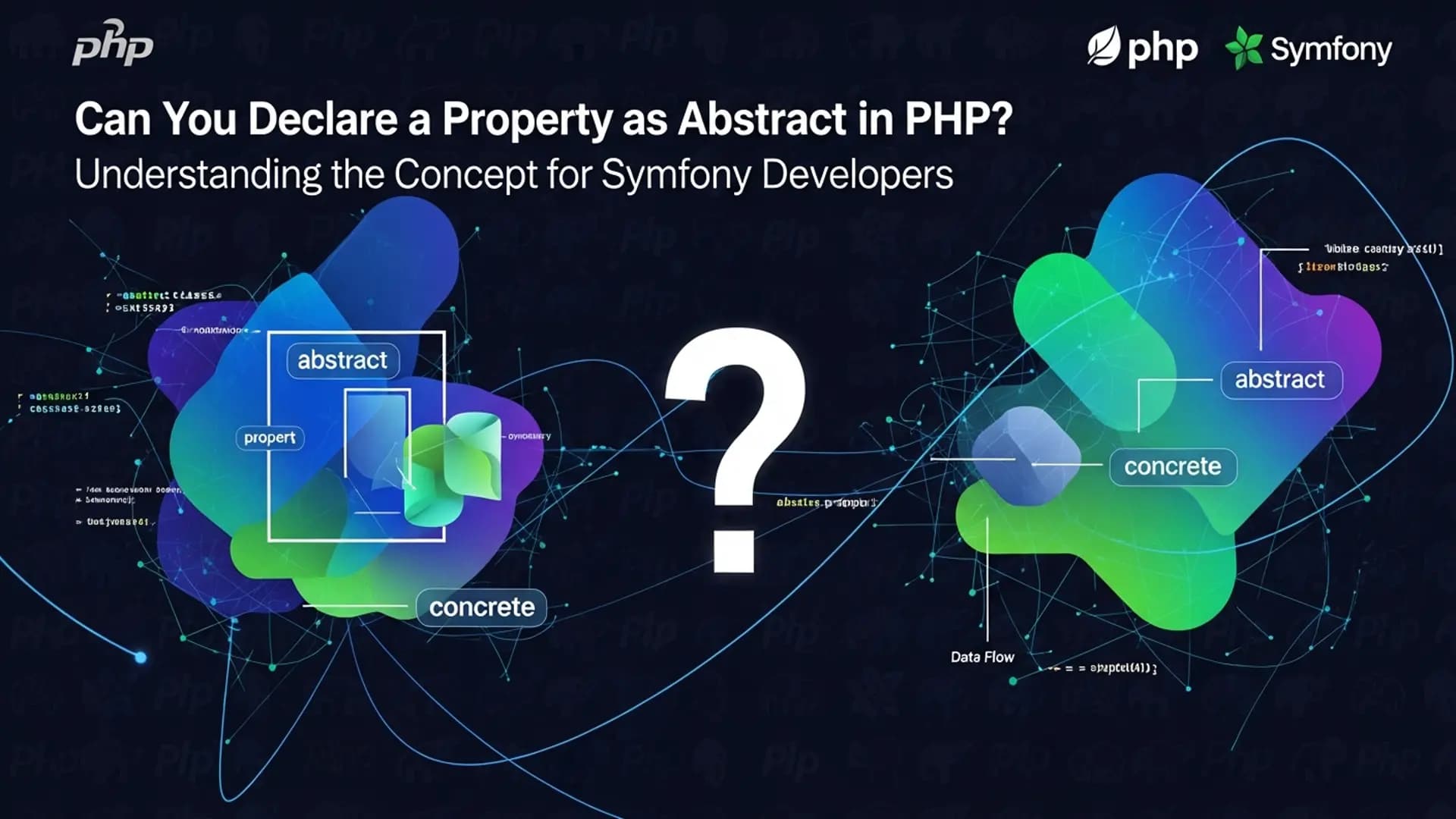
The straightforward answer is No. In PHP, you cannot declare a property as abstract. While you can declare methods as abstract, properties lack the same functionality. This is a significant distinction that every Symfony developer should grasp.
To understand this better, let’s delve into some examples.
Understanding Abstract Classes and Methods
Consider the following example of an abstract class:
<?php
abstract class Animal {
    abstract public function makeSound();
}
class Dog extends Animal {
    public function makeSound() {
        return "Bark!";
    }
}
?>
In this example, makeSound() is an abstract method that must be implemented by any class that extends Animal. However, if you tried to declare a property as abstract, like this:
<?php
abstract class Animal {
    abstract public $name;
}
?>
This would result in a fatal error, as properties cannot be abstract in PHP.
Why Can't You Declare Abstract Properties?
The primary reason for this limitation is that properties in PHP are not part of the contract that classes implement. They are simply data holders. Abstract methods, on the other hand, define behavior that must be implemented, making them critical to the class contract.
For instance, in a Symfony application, you might have various services that require consistent behavior, but properties are merely attributes that differ from one instance to another.
Practical Implications for Symfony Developers
When developing applications in Symfony, understanding the limitations of declaring properties as abstract helps in structuring your code effectively.
For example, consider a service that interacts with different payment methods. You might have a base class:
<?php
abstract class PaymentMethod {
    abstract public function processPayment($amount);

    // Property that is not abstract but requires implementation
    protected $currency;
}
?>
This structure allows you to enforce the implementation of the processPayment() method while managing a shared property like currency.
Alternatives to Abstract Properties
While you cannot declare properties as abstract, you can achieve similar functionality through other means:
One common approach is to use getters and setters for properties:
<?php
abstract class Animal {
    protected $name;

    public function getName() {
        return $this->name;
    }

    public function setName($name) {
        $this->name = $name;
    }
}
?>
This way, you can ensure that each subclass handles the property as needed without enforcing an abstract declaration.
Best Practices When Designing Abstract Classes
When creating abstract classes in Symfony, consider the following best practices:
-
Use Abstract Methods Wisely: Abstract methods should represent essential behaviors that subclasses must implement.
-
Avoid Complex Logic in Abstract Classes: Keep abstract classes simple and focused on defining the interface for subclasses.
-
Document Your Code: Provide clear documentation for abstract classes and methods to guide other developers.
Following these practices not only aids in code maintainability but also enhances collaboration among team members.
Conclusion: Why This Matters for Symfony Certification
Understanding the limitations of abstract properties is essential for Symfony developers, especially when preparing for the Symfony certification exam. A solid grasp of these concepts demonstrates a deeper understanding of PHP’s object-oriented principles, which is crucial for writing robust, maintainable code.
Moreover, knowing how to effectively use abstract classes and methods can significantly enhance your application architecture, leading to better-designed Symfony applications.
For further reading, check out our articles on PHP Type System and Advanced Twig Templating for deeper insights into PHP and Symfony practices.
Additional Resources
For more information on the PHP language and Symfony framework, refer to the official PHP documentation and the Doctrine QueryBuilder Guide for effective query building techniques.