Understanding HTTP response status codes, especially those in the 4xx range, is crucial for Symfony developers. This knowledge directly impacts how we handle errors and improve user experience in web applications.
What are HTTP Response Status Codes?
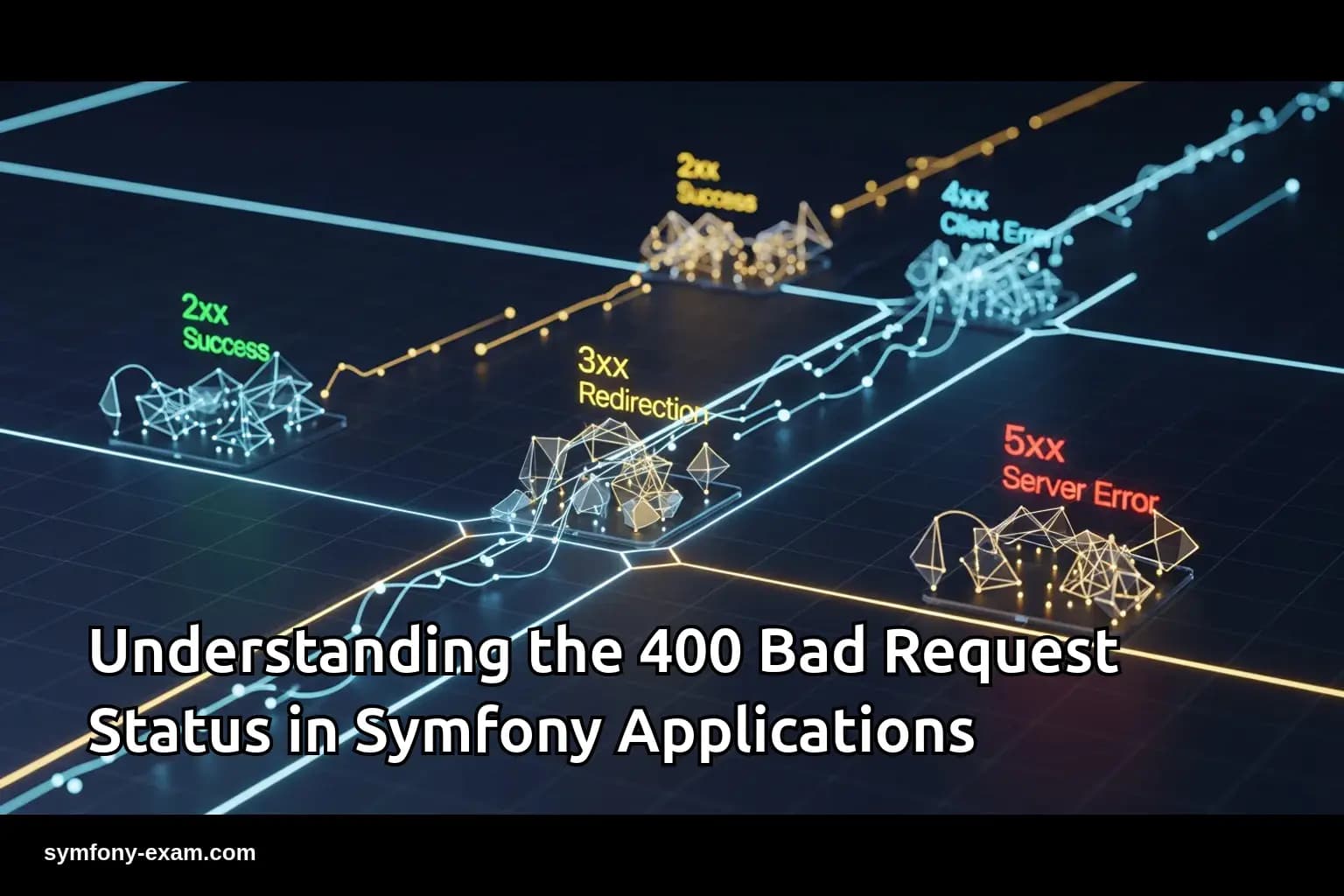
HTTP response status codes are issued by a server in response to a client's request made to the server. They represent the outcome of that request. The codes are grouped into five ranges:
1xx for informational responses, 2xx for successful responses, 3xx for redirection messages, 4xx for client errors, and 5xx for server errors. This article will focus on the 4xx range and its significance for Symfony developers.
The 4xx Range: Client Errors
The 4xx status codes indicate that the client seems to have made an error. These errors are typically due to invalid request parameters, missing resources, or unauthorized access. Here are some common 4xx status codes:
400 Bad Request: The server cannot process the request due to a client error (e.g., malformed request syntax).
401 Unauthorized: Authentication is required and has failed or has not yet been provided.
403 Forbidden: The server understands the request but refuses to authorize it.
404 Not Found: The requested resource could not be found on the server.
408 Request Timeout: The server timed out waiting for the request.
Practical Examples in Symfony Applications
Understanding these status codes is critical for Symfony developers. Let's explore how they might manifest in common scenarios.
Handling a 404 Not Found Error
A 404 Not Found error is often encountered when a user requests a non-existent page. In Symfony, this can arise from routing issues. For example:
// src/Controller/PageController.php

use Symfony\Component\HttpFoundation\Response;
use Symfony\Component\Routing\Annotation\Route;

class PageController
{
    /**
     * @Route("/page/`{slug}`", name="page_show")
     */
    public function show(string $slug): Response
    {
        $page = $this->pageRepository->findOneBy(['slug' => $slug]);

        if (!$page) {
            throw $this->createNotFoundException('Page not found');
        }

        return $this->render('page/show.html.twig', ['page' => $page]);
    }
}
In this example, if the $slug does not correspond to any existing page, the method throws a NotFoundHttpException, resulting in a 404 status code.
Handling a 403 Forbidden Error
The 403 Forbidden error can occur when a user tries to access a resource they do not have permission to view. Consider the following example:
// src/Controller/AdminController.php

use Symfony\Component\HttpFoundation\Response;
use Symfony\Component\Routing\Annotation\Route;

class AdminController
{
    /**
     * @Route("/admin", name="admin_dashboard")
     */
    public function dashboard(): Response
    {
        if (!$this->isGranted('ROLE_ADMIN')) {
            throw $this->createAccessDeniedException('You do not have permission to access this page.');
        }

        return $this->render('admin/dashboard.html.twig');
    }
}
In this scenario, if the user lacks the ROLE_ADMIN, the application responds with a 403 Forbidden status.
Best Practices for Handling 4xx Errors in Symfony
To ensure a robust application, consider these best practices:
Custom Error Pages: Create user-friendly error pages for each 4xx status code. This enhances user experience and provides guidance.
Logging: Implement logging for 4xx errors to help track and debug issues. Symfony provides built-in logging capabilities that can be leveraged.
Client-Side Validation: Ensure that client-side validation is in place to prevent bad requests. While server-side validation is essential, client-side checks can reduce unnecessary server load.
Conclusion: The Importance of 4xx Codes for Symfony Certification
A firm understanding of HTTP response status codes in the 4xx range is vital for any Symfony developer, especially for those preparing for the Symfony certification exam. Recognizing the implications of these codes, along with their practical applications, demonstrates a deep comprehension of error handling within web applications.
As you prepare for your certification, consider reviewing related resources such as PHP Type System, Advanced Twig Templating, and Doctrine QueryBuilder Guide. Understanding Symfony's error handling will not only aid your exam preparation but also enhance your ability to develop robust applications.
Further Reading and Resources
For more information on HTTP status codes, you can refer to the MDN Web Docs. Additionally, check out Symfony's official documentation to deepen your knowledge on Symfony Security Best Practices.