Is It Essential to Define Status Codes When Throwing HTTP Exceptions in Symfony?
When developing applications with Symfony, throwing HTTP exceptions is a common practice for handling errors and managing responses. However, a critical question arises: Is it essential to define status codes when throwing HTTP exceptions in Symfony? In this in-depth article, we will explore the significance of defining status codes, their impact on the application, and provide practical examples for developers preparing for the Symfony certification exam.
Understanding HTTP Exceptions in Symfony
Symfony provides a robust way to handle HTTP exceptions through its HttpException class and other built-in exception types. These exceptions allow developers to communicate errors effectively by sending appropriate HTTP response codes along with error messages.
What Are HTTP Status Codes?
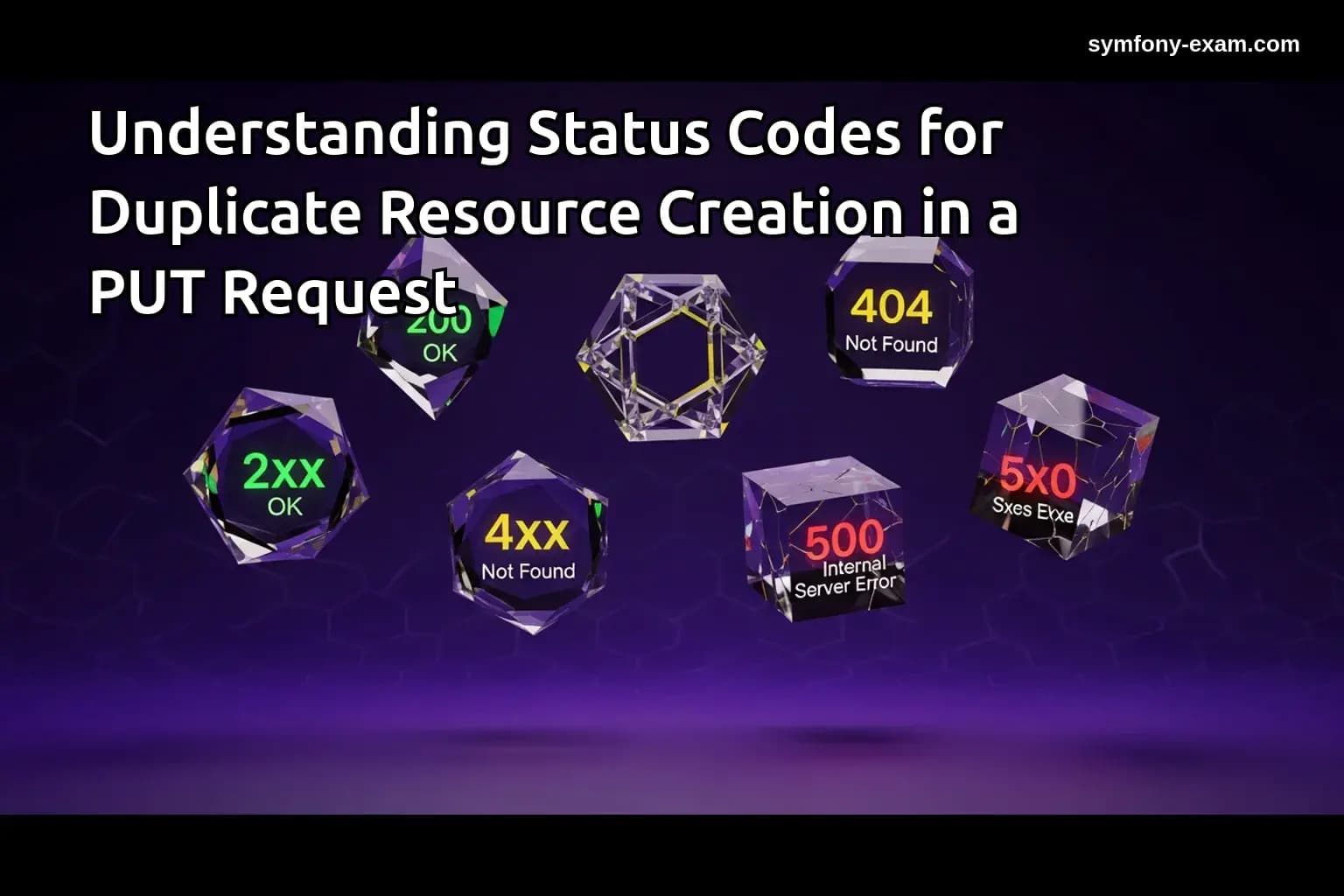
HTTP status codes are three-digit numbers returned by a server to indicate the outcome of a client's request. They are categorized into several classes:
- 1xx: Informational responses
- 2xx: Successful responses
- 3xx: Redirection messages
- 4xx: Client error responses
- 5xx: Server error responses
Using the correct status code helps clients understand what happened during the request and how to proceed.
Why Define Status Codes?
Defining status codes when throwing HTTP exceptions is not just a matter of good practice; it has several implications for the overall functionality and user experience of your Symfony application.
1. Clarity in Error Handling
When you throw an HTTP exception with a defined status code, you provide clarity about the nature of the error. For example, a 404 Not Found status clearly indicates that the requested resource does not exist, while a 500 Internal Server Error suggests something went wrong on the server side.
Example:
use Symfony\Component\HttpKernel\Exception\NotFoundHttpException;

throw new NotFoundHttpException('The requested resource was not found.');
In the above code, the NotFoundHttpException automatically assigns a 404 status code, making it clear to the client that the resource could not be found.
2. Improved Client-Side Handling
Clients, whether they are web browsers or other applications, rely on status codes to handle responses appropriately. Without defined status codes, the client may misinterpret the server's response, leading to confusion or incorrect behavior.
Practical Example in a Symfony Controller:
use Symfony\Component\HttpFoundation\Response;

public function show($id): Response {
    $entity = $this->repository->find($id);

    if (!$entity) {
        throw new NotFoundHttpException('Entity not found.');
    }

    // Return the found entity
    return $this->json($entity);
}
In this example, if the entity is not found, the client receives a 404 status code, allowing it to handle the error correctly, such as displaying a user-friendly message.
3. Consistency Across Your Application
Defining status codes ensures that your application behaves consistently. This consistency is vital for debugging and maintaining the application, as both developers and users can expect predictable behavior.
Best Practices for Defining Status Codes
When defining status codes in your Symfony application, consider the following best practices:
Use Appropriate Status Codes
Select the status code that best fits the situation. Here are some common scenarios:
- 400 Bad Request: For malformed requests
- 401 Unauthorized: When authentication is required
- 403 Forbidden: When access is denied
- 404 Not Found: For non-existent resources
- 500 Internal Server Error: For unexpected server errors
Custom Exception Classes
Consider creating custom exception classes to encapsulate specific errors within your application. This allows you to define specific status codes and messages relevant to your business logic.
namespace App\Exception;

use Symfony\Component\HttpKernel\Exception\HttpException;

class CustomNotFoundException extends HttpException {
    public function __construct($message = 'Resource not found') {
        parent::__construct(404, $message);
    }
}
You can then throw this custom exception in your controllers, ensuring that the correct status code is always returned.
Utilize the Symfony Exception Listener
Symfony's ExceptionListener can be configured to handle exceptions globally. This allows you to centralize your error handling and ensure that consistent status codes are returned for various exceptions.
Example of Exception Listener
namespace App\EventListener;

use Symfony\Component\HttpKernel\Event\ExceptionEvent;
use Symfony\Component\HttpFoundation\JsonResponse;

class ExceptionListener {
    public function onKernelException(ExceptionEvent $event) {
        $exception = $event->getThrowable();
        $response = new JsonResponse(['error' => $exception->getMessage()]);

        if ($exception instanceof NotFoundHttpException) {
            $response->setStatusCode(Response::HTTP_NOT_FOUND);
        } else {
            $response->setStatusCode(Response::HTTP_INTERNAL_SERVER_ERROR);
        }

        $event->setResponse($response);
    }
}
This listener checks the type of exception and assigns the appropriate status code, ensuring consistent handling across the application.
Complex Conditions and Status Codes
In real-world Symfony applications, you often face complex conditions that determine whether to throw an exception and which status code to use. This complexity can arise in various areas, such as service logic or when building Doctrine DQL queries.
Example of Complex Condition in a Service
public function updateEntity($id, $data): Response {
    $entity = $this->repository->find($id);

    if (!$entity) {
        throw new NotFoundHttpException('Entity not found.');
    }

    if ($data['status'] === 'inactive') {
        throw new HttpException(403, 'Cannot deactivate this entity.');
    }

    // Update entity logic...
}
In this example, we handle multiple conditions. If the entity is not found, a 404 status code is thrown. If the entity cannot be deactivated, a 403 status code is assigned.
Logic Within Twig Templates
While throwing exceptions typically occurs in controllers or services, the implications extend to how you design your Twig templates. Properly handling responses in your templates can provide better user experiences.
Example in a Twig Template
{% if status_code == 404 %}
    <h1>Page Not Found</h1>
    <p>Sorry, the page you're looking for doesn't exist.</p>
{% elseif status_code == 403 %}
    <h1>Access Forbidden</h1>
    <p>You do not have permission to access this resource.</p>
{% endif %}
By checking the status_code variable, you can tailor the user experience based on the exception thrown in your controllers.
Conclusion: The Importance of Defining Status Codes
In conclusion, defining status codes when throwing HTTP exceptions in Symfony is essential for clarity, consistency, and improved client-side handling. As a developer preparing for the Symfony certification exam, mastering this practice will not only enhance your applications but also demonstrate a strong understanding of Symfony's capabilities.
By following best practices, utilizing custom exceptions, and leveraging Symfony's built-in features, you can create robust error handling mechanisms that improve both developer experience and user satisfaction. As you prepare for your certification, remember that a solid grasp of HTTP status codes is crucial in developing high-quality Symfony applications.