As Symfony developers, understanding the secure handling of user credentials is crucial, especially regarding cookies. This discussion will help prepare you for the Symfony certification exam.
The Risks of Storing User Passwords in Cookies
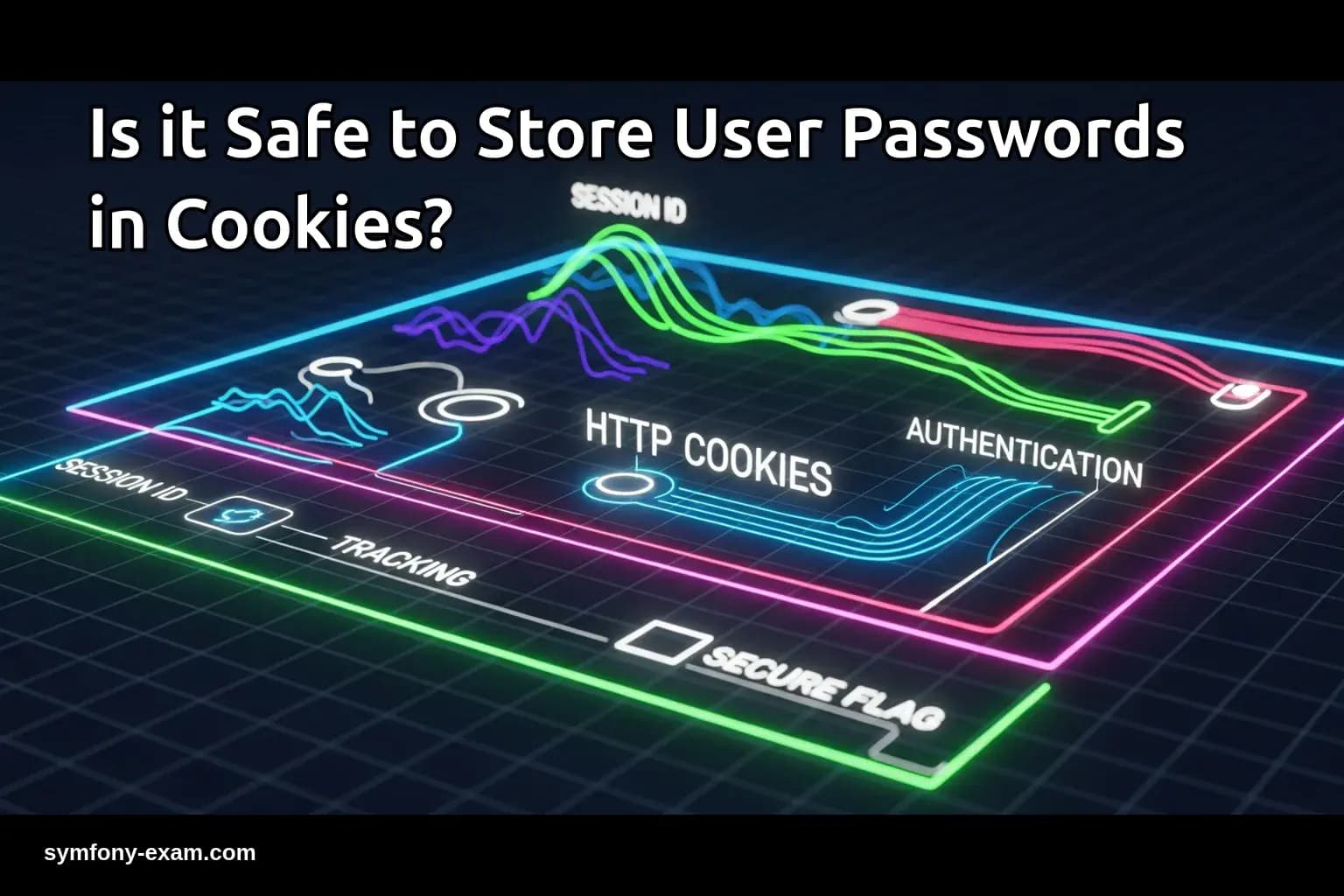
Storing user passwords in cookies is generally considered a bad practice due to several security risks. Cookies can be accessed by anyone who has access to the user's device, making sensitive information vulnerable to various attacks.
For instance, if a user's device is compromised, an attacker can easily retrieve the passwords stored in cookies, leading to account takeovers.
Moreover, cookies are transmitted over the network with each request, exposing them to interception through attacks such as man-in-the-middle (MITM).
Why Cookies are Not Suitable for Password Storage
Cookies are designed for state management, not for storing sensitive data. Here are key reasons why storing passwords in cookies is unsafe:
First, cookies can be easily manipulated by the user or an attacker. If a password is stored in a cookie, it can be altered, leading to potential security vulnerabilities.
Second, cookies can be sent over unencrypted connections, exposing any sensitive data contained within them. Always ensure you are using HTTPS to secure data in transit.
Lastly, cookies have an expiration time that, if not managed correctly, can lead to stale authentication states where users may inadvertently remain logged in.
Best Practices for Handling User Authentication in Symfony
Instead of storing passwords in cookies, follow these best practices:
Use secure authentication tokens. When a user logs in, generate a secure token and store it in the user's cookie. This token should be unique and tied to the user session.
Implement HTTP-only and secure flags for cookies. This prevents client-side scripts from accessing cookie data and ensures cookies are only sent over secure connections.
Use Symfony's built-in security features. Symfony provides robust tools for managing user authentication and authorization, which should be leveraged rather than handling raw password storage.
Handling Authentication Tokens in Symfony
When using authentication tokens, consider the following implementation example:
<?php
// In your Symfony controller after successful login
$token = bin2hex(random_bytes(32)); // Generate a secure token
$response = new Response();
$response->headers->setCookie(new Cookie('auth_token', $token, time() + 3600, '/', null, true, true)); // Set cookie with HTTP-only and secure flags
$response->send();
?>
This example shows how to securely create an authentication token and store it in a cookie. The use of bin2hex(random_bytes(32)) ensures the token is random and secure.
Conclusion: Why Secure Password Storage Matters
In conclusion, storing user passwords in cookies is not safe and can lead to severe security vulnerabilities. As Symfony developers, understanding these risks and implementing secure practices is crucial for the integrity of your applications and for passing the Symfony certification exam.
Always prioritize using secure authentication tokens over direct password storage, and leverage Symfony's built-in security mechanisms to protect user data effectively.
For further reading, consider exploring our related articles on PHP Type System, Advanced Twig Templating, and Doctrine QueryBuilder Guide, which provide deeper insights into Symfony best practices.
For more information on secure cookie handling, refer to the official PHP documentation.