The PATCH method plays a crucial role in RESTful APIs, allowing developers to perform partial updates to resources. Understanding how to effectively utilize this method is essential for Symfony developers, especially those preparing for certification.
What is the PATCH Method?
The PATCH method is one of the HTTP methods defined in the HTTP specification. It is primarily used to apply partial modifications to a resource. Unlike the PUT method, which replaces an entire resource, PATCH allows you to send only the data that needs to be changed, making it more efficient in scenarios where only a subset of a resource's data needs updating.
For example, when updating a user profile, you might only want to change the email address or the user's display name rather than sending the entire profile data.
How PATCH Differs from Other HTTP Methods
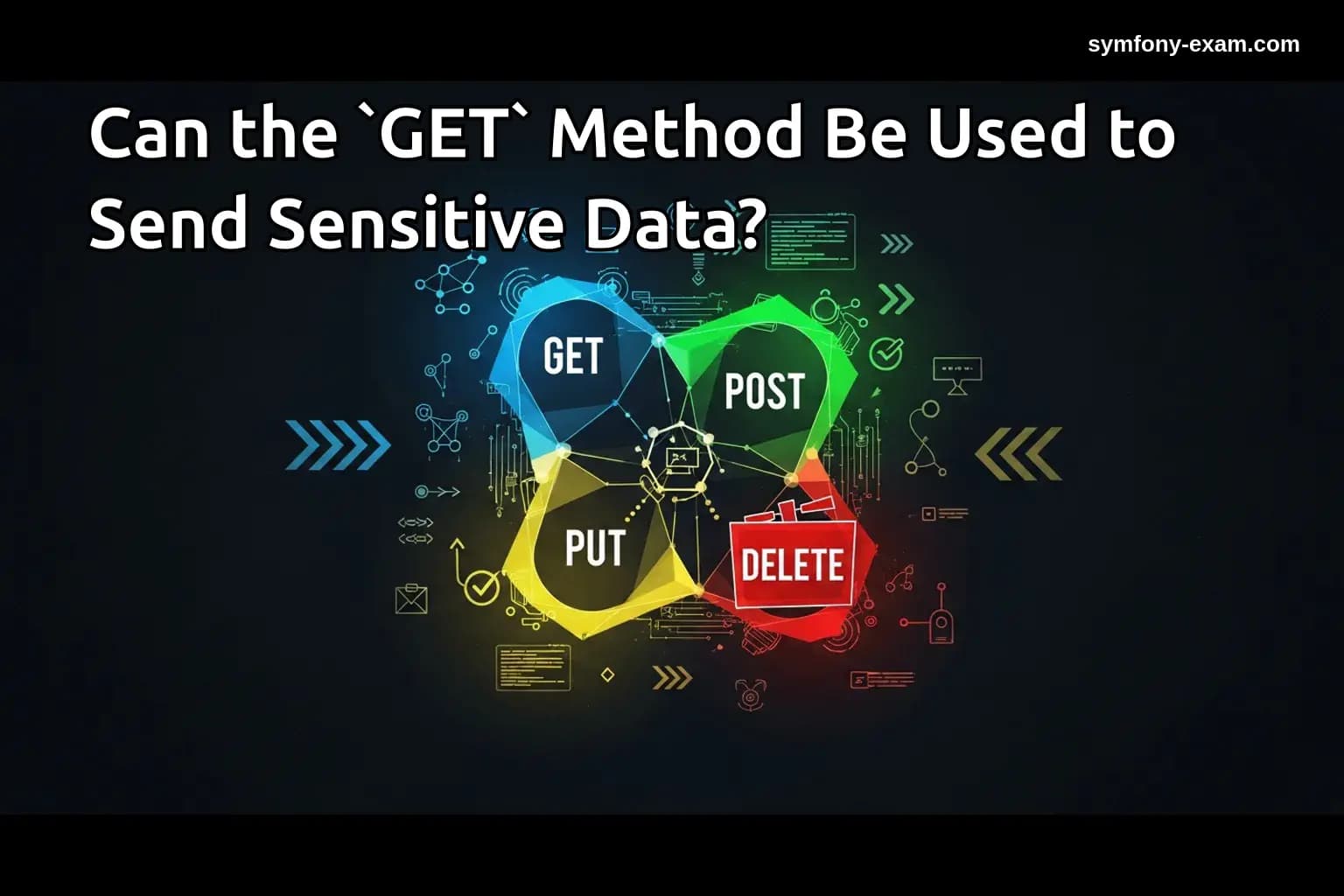
To better understand the PATCH method, it's important to differentiate it from other HTTP methods:
GET: Retrieves data from the server without modifying it.
POST: Typically used to create a new resource.
PUT: Replaces an entire resource with the provided data.
DELETE: Removes a resource from the server.
Implementing the PATCH Method in Symfony
In Symfony, you can implement the PATCH method within your controllers. Here’s a practical example of how to handle a PATCH request for updating a user's profile:
<?php
// src/Controller/UserController.php

use Symfony\Component\HttpFoundation\Request;
use Symfony\Component\HttpFoundation\Response;
use Symfony\Component\Routing\Annotation\Route;
use App\Entity\User;

class UserController extends AbstractController
{
    /**
     * @Route("/user/`{id}`", methods={"PATCH"})
     */
    public function patchUser(Request $request, User $user): Response
    {
        $data = json_decode($request->getContent(), true);

        if (isset($data['email'])) {
            $user->setEmail($data['email']);
        }

        if (isset($data['displayName'])) {
            $user->setDisplayName($data['displayName']);
        }

        $entityManager = $this->getDoctrine()->getManager();
        $entityManager->flush();

        return $this->json($user);
    }
}
?>
In this example, the method listens for a PATCH request at the specified route. It checks for the presence of specific fields in the request body and updates them accordingly. Note how we use JSON to transmit the data.
Handling Complex Conditions in Services
When dealing with more complex updates, you may want to encapsulate the logic within a service class. This promotes reusability and keeps your controller lean. Here’s how you can structure a service to handle partial updates:
<?php
// src/Service/UserUpdateService.php

namespace App\Service;

use App\Entity\User;
use Doctrine\ORM\EntityManagerInterface;

class UserUpdateService
{
    private $entityManager;

    public function __construct(EntityManagerInterface $entityManager)
    {
        $this->entityManager = $entityManager;
    }

    public function updateUser(User $user, array $data): void
    {
        if (isset($data['email'])) {
            $user->setEmail($data['email']);
        }

        if (isset($data['displayName'])) {
            $user->setDisplayName($data['displayName']);
        }

        $this->entityManager->flush();
    }
}
?>
You can then inject this service into your controller and call it when processing the PATCH request. This separation of concerns helps maintain cleaner code.
Working with Doctrine and PATCH
When updating entities using Doctrine, it's important to remember that only the properties that have changed need to be flushed. The PATCH method works well with Doctrine’s ability to handle partial updates, as shown in our previous examples. Here's how you would typically manage a PATCH operation with DQL:
<?php
// src/Repository/UserRepository.php

namespace App\Repository;

use App\Entity\User;
use Doctrine\Bundle\DoctrineBundle\Repository\ServiceEntityRepository;
use Doctrine\Persistence\ManagerRegistry;

class UserRepository extends ServiceEntityRepository
{
    public function __construct(ManagerRegistry $registry)
    {
        parent::__construct($registry, User::class);
    }

    public function partialUpdateUser($id, array $data): void
    {
        $user = $this->find($id);
        if (!$user) {
            throw new \Exception("User not found");
        }

        foreach ($data as $field => $value) {
            if (property_exists($user, $field)) {
                $user->{'set' . ucfirst($field)}($value);
            }
        }

        $this->_em->flush();
    }
}
?>
In this case, the repository method partialUpdateUser checks for the existence of each property before updating, ensuring that only valid fields are modified.
Twig Templates and PATCH Method
When building frontend applications that consume your Symfony API, you may want to create forms that utilize the PATCH method. Here’s how you can set it up in a Twig template:
twig
{# templates/user/edit.html.twig #}
<form action="{{ path('user_patch', { 'id': user.id }) }}" method="post" id="userEditForm">
    <input type="text" name="email" value="{{ user.email }}" />
    <input type="text" name="displayName" value="{{ user.displayName }}" />
    <button type="submit">Update User</button>
</form>
<script>
    document.getElementById('userEditForm').onsubmit = function() {
        // Handle form submission via AJAX or fetch API
    };
</script>
This form is set up to send a PATCH request when submitted. You can use JavaScript to enhance functionality, such as sending the data via AJAX to avoid page reloads.
Error Handling in PATCH Requests
Error handling is vital when dealing with PATCH requests. You should ensure that your application can gracefully handle scenarios where the requested fields are invalid or missing:
php
// src/Controller/UserController.php

public function patchUser(Request $request, User $user): Response
{
    $data = json_decode($request->getContent(), true);

    if (!isset($data['email']) && !isset($data['displayName'])) {
        return $this->json(['error' => 'No fields to update'], Response::HTTP_BAD_REQUEST);
    }

    // Process updates...
}
By validating the incoming data, you can return appropriate responses, which is essential for API usability.
Best Practices for Using the PATCH Method
Here are some best practices and considerations for using the PATCH method in Symfony applications:
Use JSON: Always prefer JSON as the content type for PATCH requests. It is widely supported and easy to work with.
Validate Input: Ensure that the data being sent is validated to prevent any inconsistencies or security issues.
Document API Changes: Keep your API documentation updated to reflect the capabilities of the PATCH method, including expected request and response formats.
Use ETags: Implement ETags for caching and ensuring that clients are working with the current version of resources.
Conclusion: The Importance of the PATCH Method for Symfony Developers
Understanding the PATCH method is crucial for Symfony developers as it enables efficient resource management and enhances the overall API design. By mastering how to implement and handle PATCH requests, you not only improve your coding skills but also prepare yourself for the Symfony certification exam. With the knowledge of best practices and practical examples, you will be better equipped to create robust and maintainable applications.
For further reading, check out our articles on and .