Understanding the Range header is crucial for Symfony developers. It not only optimizes resource delivery but also enhances client-server interactions.
What is the Range Header?
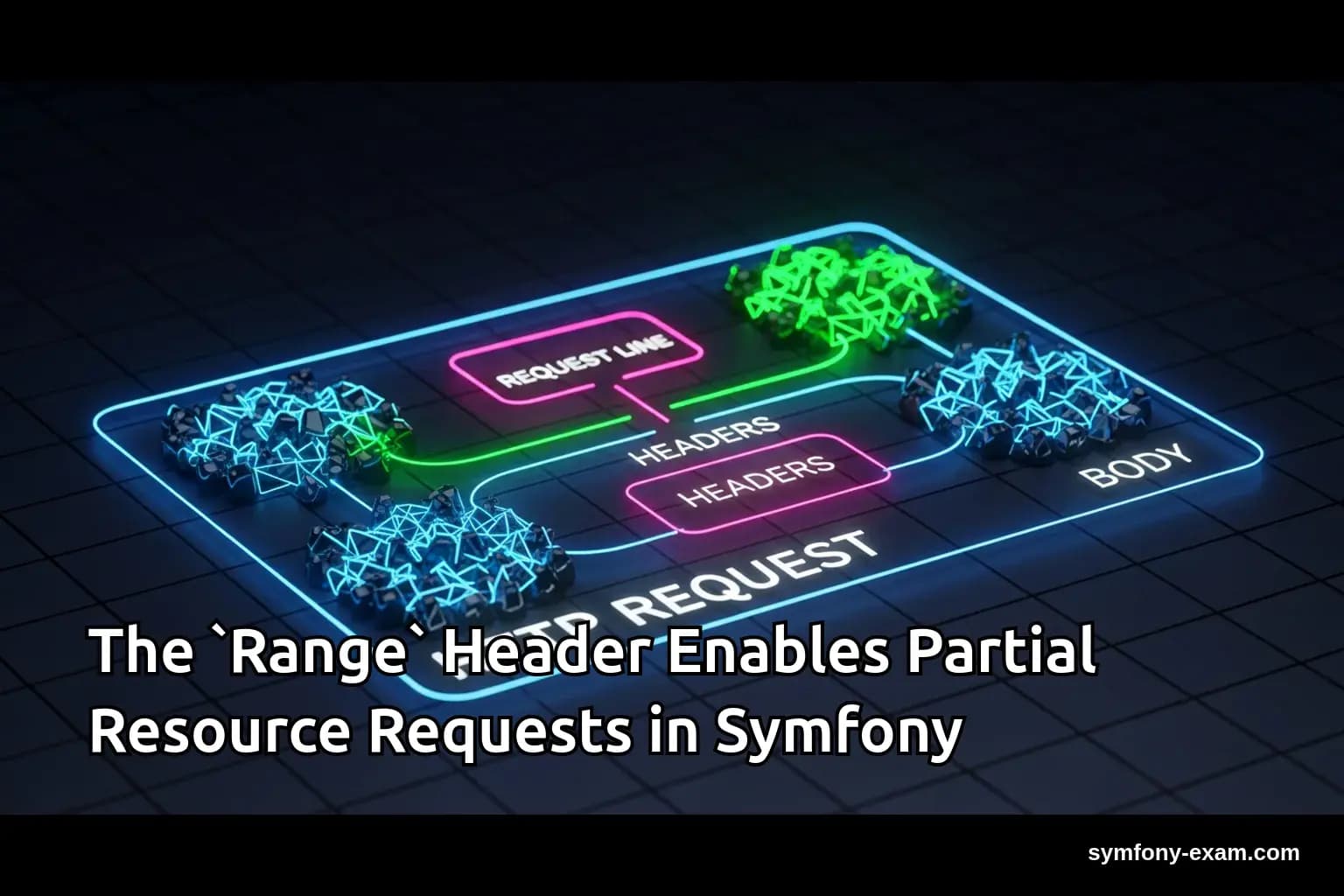
The Range header is an HTTP header used by clients to request a specific portion of a resource, rather than the entire entity. This is particularly useful for large files, such as videos or images, where loading the entire resource may not be necessary.
By using the Range header, developers can improve application performance and user experience. For example, a video player can request only the part of the video that is needed for immediate playback, allowing for faster loading times and reduced bandwidth usage.
Why is the Range Header Important for Symfony Developers?
In Symfony applications, efficiently handling requests and responses is critical. The Range header can significantly enhance performance, especially when dealing with media files, large datasets, or APIs that serve substantial content.
By understanding how to implement the Range header, Symfony developers can create more responsive applications that cater to users' needs effectively. Furthermore, mastering this concept is essential for the Symfony certification exam, as it demonstrates proficiency in handling HTTP protocols and optimizing resource delivery.
Implementing the Range Header in Symfony
To implement the Range header in a Symfony application, you typically need to modify your controller to handle the Range requests. Below is a practical example.
<?php
// src/Controller/MediaController.php

namespace App\Controller;

use Symfony\Component\HttpFoundation\Request;
use Symfony\Component\HttpFoundation\Response;
use Symfony\Component\HttpFoundation\ResponseHeaderBag;
use Symfony\Component\Routing\Annotation\Route;

class MediaController
{
    /**
     * @Route("/media/{filename}", name="media_show")
     */
    public function show($filename, Request $request)
    {
        $filepath = '/path/to/media/' . $filename;
        $size = filesize($filepath);
        $response = new Response();

        // Check if the Range header is present
        if ($request->headers->has('Range')) {
            $range = $request->headers->get('Range');
            // Parse the Range header
            if (preg_match('/bytes=(\d+)-(\d+)?/', $range, $matches)) {
                $start = (int)$matches[1];
                $end = isset($matches[2]) ? (int)$matches[2] : $size - 1;

                // Set the appropriate content range and status code
                $response->setStatusCode(Response::HTTP_PARTIAL_CONTENT);
                $response->headers->set('Content-Range', "bytes $start-$end/$size");
                $response->headers->set('Content-Length', $end - $start + 1);
                $response->setContent(file_get_contents($filepath, false, null, $start, $end - $start + 1));
            }
        } else {
            // Serve the entire file if no Range header is present
            $response->setContent(file_get_contents($filepath));
            $response->headers->set('Content-Length', $size);
        }

        return $response;
    }
}
In this example, we check for the Range header in the request. If it exists, we parse the range and serve the requested portion of the resource. If not, we serve the entire file.
Handling Edge Cases
When implementing the Range header, it's important to handle various edge cases. Here are a few scenarios developers should consider:
1. Invalid Ranges: If the requested range is invalid (e.g., exceeds the resource size), return a 416 status code (Range Not Satisfiable).
2. Overlapping Ranges: If overlapping ranges are requested, you should define how to handle them, either by returning the first range or merging them.
3. Caching: Implement proper caching headers to ensure clients can cache the partial responses effectively.
Testing Your Implementation
Once you have implemented the Range header, it is essential to test the functionality thoroughly. You can use tools like Postman to simulate Range requests and verify that your application behaves as expected.
Additionally, consider writing automated tests in Symfony to ensure that your Range handling logic works correctly after future updates. Here’s a simple PHPUnit test example:
<?php
// tests/Controller/MediaControllerTest.php

namespace App\Tests\Controller;

use Symfony\Bundle\FrameworkBundle\Test\WebTestCase;

class MediaControllerTest extends WebTestCase
{
    public function testPartialContent()
    {
        $client = static::createClient();
        $client->request('GET', '/media/sample.mp4', [], [], ['HTTP_RANGE' => 'bytes=0-499']);

        $this->assertResponseStatusCodeSame(206); // Check for Partial Content response
        $this->assertHeaderContains('Content-Range', 'bytes 0-499/');
    }
}
In this test case, we simulate a range request and check that the response status is 206 (Partial Content) and that the Content-Range header is set correctly.
Conclusion: The Significance of the Range Header in Symfony Development
Mastering the Range header is not just about enhancing performance; it showcases your understanding of HTTP protocols and resource management. For Symfony developers, this knowledge is pivotal for crafting high-quality applications that deliver seamless user experiences.
As you prepare for the Symfony certification exam, focus on understanding how to leverage HTTP headers like Range effectively. This will not only aid you in passing the exam but also make you a more proficient developer.
For additional reading, explore our related posts: and .