How to Identify Invalid HTTP Response Status Codes for Symfony Developers
As a Symfony developer, understanding HTTP response status codes is crucial not only for building robust applications but also for passing the Symfony certification exam. HTTP status codes are essential for communicating the outcome of a client's request to the server. They help in defining how the server processed the request, whether there were errors, or if the request was successful.
In this article, we will delve into what constitutes a valid HTTP response status code, explore some common mistakes, and provide practical examples that you might encounter in your Symfony applications. Let's ensure that you are well-prepared for the certification exam, particularly focusing on identifying which of the following is NOT a valid response status code.
What are HTTP Response Status Codes?
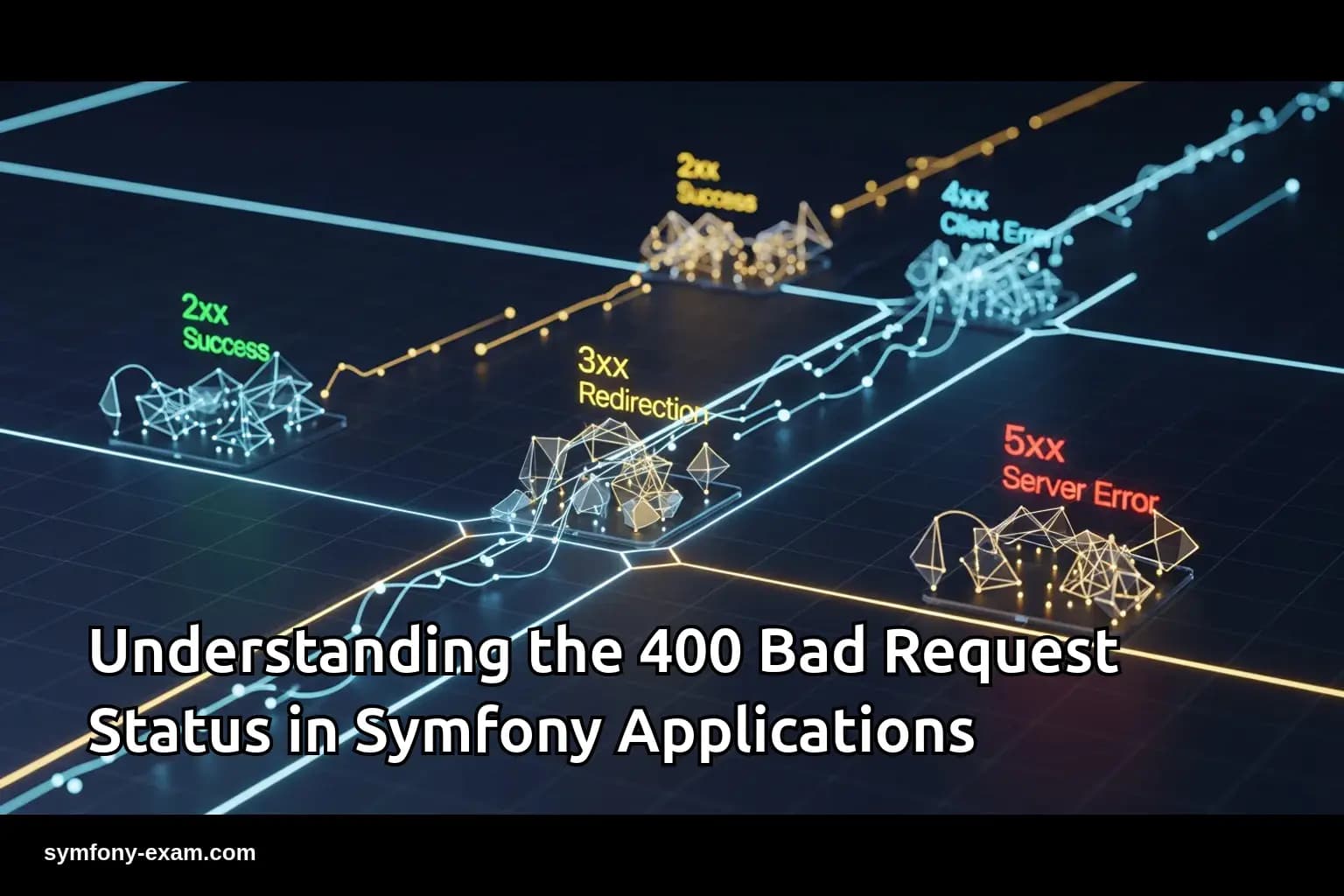
HTTP response status codes are three-digit numbers that the server sends in response to a client's request. These codes are categorized into five groups:
- 1xx (Informational): Indicates that the request was received and understood.
- 2xx (Successful): Indicates that the request was successfully processed.
- 3xx (Redirection): Indicates that further action needs to be taken to complete the request.
- 4xx (Client Error): Indicates that the client made an error (e.g., a malformed request).
- 5xx (Server Error): Indicates that the server failed to fulfill a valid request.
Examples of Valid Response Status Codes
Here are some common valid HTTP status codes that every Symfony developer should know:
- 200 OK: The request was successful.
- 201 Created: The request has been fulfilled and resulted in a new resource being created.
- 204 No Content: The server successfully processed the request, but is not returning any content.
- 400 Bad Request: The server could not understand the request due to invalid syntax.
- 404 Not Found: The server can't find the requested resource.
- 500 Internal Server Error: The server encountered a situation it doesn't know how to handle.
Knowing these codes and their meanings is imperative for diagnosing issues in your Symfony applications and for effectively handling responses in your APIs.
Identifying Invalid Response Status Codes
As you prepare for the Symfony certification exam, you may encounter questions regarding invalid HTTP response status codes. It is essential to be able to distinguish between valid and invalid codes. Here are some common invalid status codes that you might come across:
- 600 Invalid Request
- 700 Unknown Error
- 999 Non-standard Response
None of the codes listed above are valid in the HTTP specification.
Why is Identifying Invalid Codes Important?
Understanding which codes are valid and which are not will help you to:
- Debug effectively: When you see a response code that is not part of the standard, you can quickly identify issues in your application logic or in third-party services.
- Implement proper error handling: Knowing valid codes allows you to implement appropriate response mechanisms in your Symfony applications.
- Enhance API compliance: If you're developing an API, ensuring that your response codes conform to standards helps clients understand the outcome of their requests.
Practical Examples in Symfony
Let's look at how you can handle HTTP response statuses in your Symfony applications using controllers, services, and Twig templates.
Handling Response Status in Controllers
In Symfony, controllers can return various types of responses, including those with specific status codes. Here's an example of a controller method that demonstrates how to return different status codes based on business logic:
use SymfonyComponentHttpFoundationResponse;
use SymfonyComponentHttpFoundationJsonResponse;

class UserController
{
    public function getUser($id): JsonResponse
    {
        $user = $this->userService->findUserById($id);

        if (!$user) {
            return new JsonResponse(['error' => 'User not found'], Response::HTTP_NOT_FOUND);
        }

        return new JsonResponse($user, Response::HTTP_OK);
    }
}
In this example, if the user is not found, a 404 Not Found status is returned. If the user is successfully retrieved, a 200 OK status is returned.
Complex Conditions in Services
You may also implement more complex business logic within your services to determine which status code to send back to the controller. Here's how that can look:
namespace App\Service;

use App\Entity\User;
use Doctrine\ORMEntityManagerInterface;

class UserService
{
    private EntityManagerInterface $entityManager;

    public function __construct(EntityManagerInterface $entityManager)
    {
        $this->entityManager = $entityManager;
    }

    public function findUserById(int $id): ?User
    {
        return $this->entityManager->getRepository(User::class)->find($id);
    }

    public function deleteUser(int $id): int
    {
        $user = $this->findUserById($id);
        if (!$user) {
            return Response::HTTP_NOT_FOUND;
        }

        $this->entityManager->remove($user);
        $this->entityManager->flush();

        return Response::HTTP_NO_CONTENT;
    }
}
In this example, the deleteUser method will return 404 Not Found if the user does not exist, or 204 No Content if the deletion is successful.
Logic within Twig Templates
In Twig templates, you may want to display different messages based on the status code. Here’s how you can conditionally display content based on the response status:
{% if statusCode == 404 %}
    <h1>User Not Found</h1>
    <p>The user you are looking for does not exist.</p>
{% elseif statusCode == 200 %}
    <h1>User Details</h1>
    <p>{{ user.name }}</p>
{% else %}
    <h1>Unexpected Error</h1>
    <p>Please try again later.</p>
{% endif %}
This conditional logic enables you to provide user-friendly error messages based on the HTTP response status.
Common Mistakes to Avoid
When working with HTTP status codes, here are some common pitfalls to avoid:
- Using Non-standard Codes: As mentioned earlier, codes like
600or999are not valid and will likely confuse clients and lead to unexpected behavior. - Inconsistent Status Codes: Ensure that the status codes you return are consistent across your application. A
404 Not Foundshould always indicate that a resource is not found, not a validation error. - Not Handling Edge Cases: Always consider edge cases where the request might fail due to reasons outside the user's control, such as server errors.
Conclusion
Understanding which of the following is NOT a valid response status code is critical for any Symfony developer, especially when preparing for the Symfony certification exam. By familiarizing yourself with standard HTTP response codes, you can effectively handle client-server communication, debug applications, and implement robust error handling mechanisms.
Your knowledge of valid and invalid status codes will not only help you pass the certification but also improve the quality and reliability of your Symfony applications. As you continue your journey, keep these concepts in mind, practice implementing them in your projects, and enhance your understanding of Symfony development.
With a solid grasp of HTTP status codes and their implications, you'll be well-equipped to tackle the challenges of modern web development in Symfony. Good luck with your certification journey!