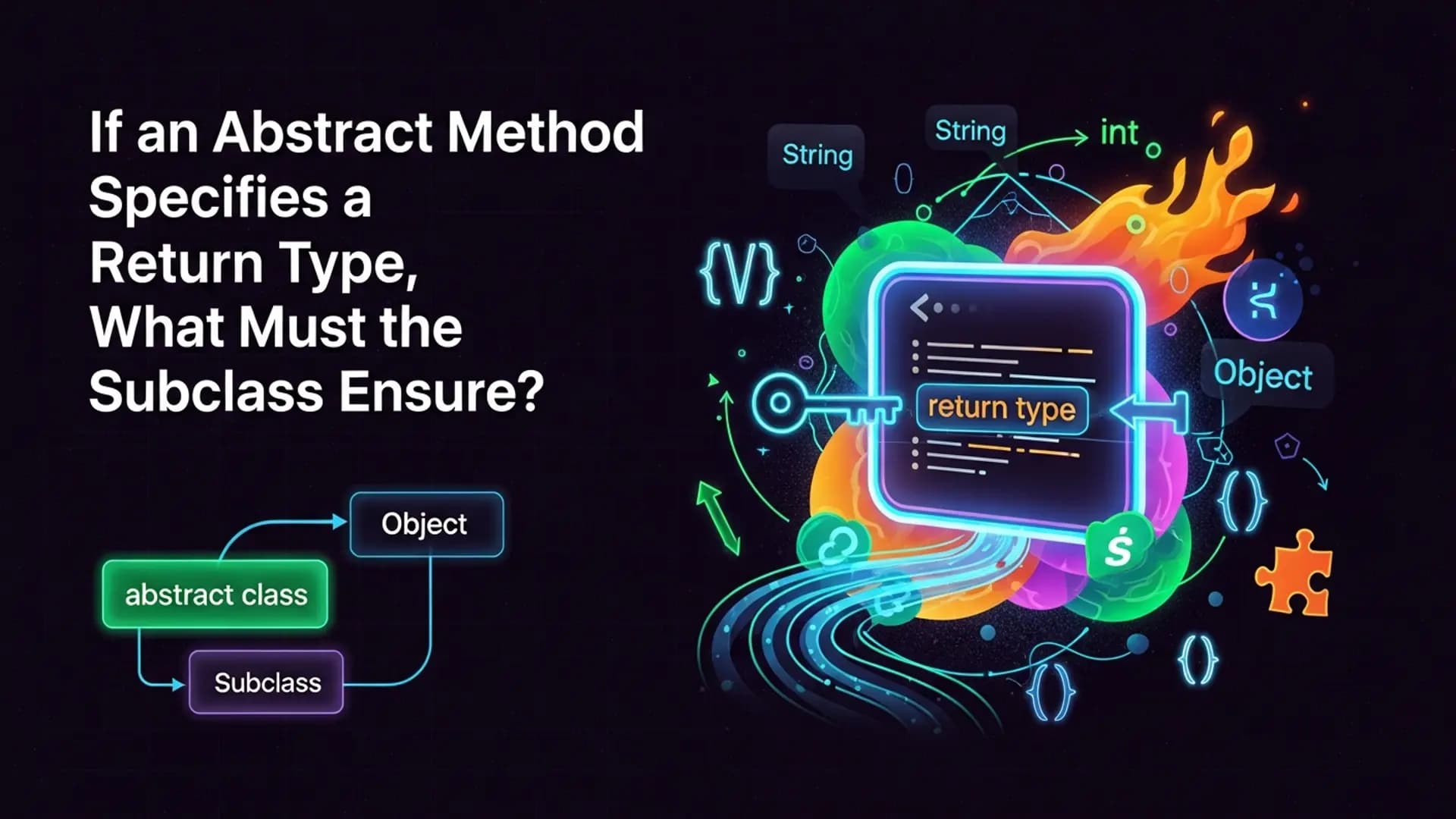
In this article, we'll delve into the implications of defining an abstract method with a return type in an abstract class, specifically within the context of Symfony development.
Understanding Abstract Classes and Methods
Abstract classes in PHP provide a way to define common functionality for subclasses. They can include abstract methods that must be implemented by any derived class.
When you define an abstract method, you're stating that the method must be implemented, but it does not provide an implementation itself. This allows for a flexible architecture where different subclasses can have different implementations.
What Happens When an Abstract Method Has a Return Type?
When an abstract class defines an abstract method with a return type, it sets a contract that all subclasses must adhere to. This means that any concrete class that extends this abstract class must implement the method and ensure it returns a value of the specified type.
For example, consider the following abstract class:
<?php
abstract class User {
    abstract public function getId(): int;
}
?>
In this case, any class extending User must implement the getId method and return an integer. Failure to do so will result in a fatal error.
Practical Symfony Application Example
In a Symfony application, you might encounter scenarios where you need to define a user repository. Here's how you can leverage an abstract class with an abstract method that has a return type:
<?php
abstract class UserRepository {
    abstract public function findUserById(int $id): User;
}

class MySQLUserRepository extends UserRepository {
    public function findUserById(int $id): User {
        // Logic to retrieve user from MySQL database
    }
}
?>
In this example, UserRepository defines an abstract method findUserById that returns a User object. Any concrete implementation, such as MySQLUserRepository, must enforce this return type.
Benefits of Return Types in Abstract Methods
Using return types in abstract methods enhances code quality through several mechanisms:
-
Type Safety: It helps catch type-related errors at compile time rather than at runtime.
-
Documentation: It serves as clear documentation for developers, indicating what type of value is expected.
-
IDE Support: Modern IDEs can provide better autocompletion and type hinting features when return types are specified.
Common Pitfalls When Using Abstract Methods with Return Types
Here are some pitfalls to be aware of:
-
Inconsistent Return Types: If a subclass does not return the correct type, it leads to runtime errors. Always ensure subclasses adhere to the defined contract.
-
Overriding with Incompatible Types: A subclass might attempt to override an abstract method with a different return type, which is not allowed. This will lead to a fatal error.
-
Complex Logic in Subclasses: Sometimes, complex logic can make it difficult to ensure the right return type is consistently enforced. Using a solid type system helps mitigate this risk.
Conclusion: Importance for Symfony Certification
Understanding how abstract classes and methods work, especially with return types, is crucial for Symfony developers. Not only does it demonstrate a strong grasp of PHP's type system, but it also reflects an understanding of best practices in object-oriented design.
By mastering these concepts, you enhance your ability to write clean, maintainable, and robust Symfony applications. This knowledge is essential for passing the Symfony certification exam and building applications that are both functional and reliable.
Further Reading
For more insights into related topics, consider exploring the following: