The WebSocket protocol has transformed how web applications communicate. For Symfony developers, understanding its synergy with HTTP is vital in creating dynamic, real-time applications. This article delves into the purpose of WebSocket and its relationship with HTTP, providing practical insights and examples for your Symfony projects.
What is the WebSocket Protocol?
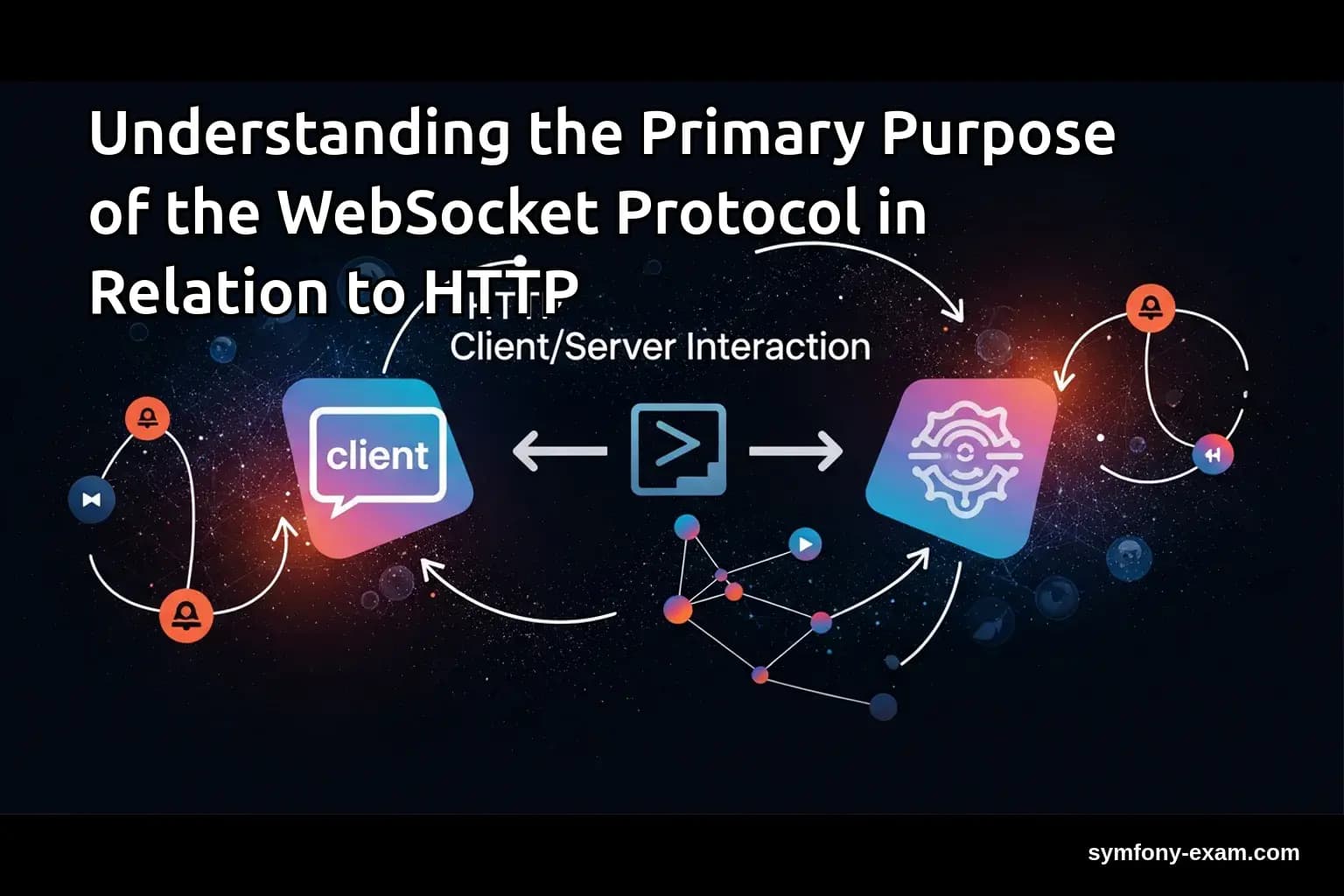
The WebSocket protocol is a communication protocol that establishes a persistent connection between a client and a server. Unlike traditional HTTP, which follows a request-response model, WebSocket enables full-duplex communication, allowing data to be sent and received simultaneously.
WebSocket is particularly useful for applications that require real-time updates, such as chat applications, live notifications, and collaborative tools.
The Relationship Between WebSocket and HTTP
While both WebSocket and HTTP are integral to modern web development, they serve different purposes:
1. Establishment: WebSocket connections begin as HTTP requests. The client sends an HTTP request to initiate a handshake with the server, which, upon acceptance, upgrades the connection to a WebSocket.
2. Communication Model: HTTP is stateless and follows a request-response model. WebSocket, however, maintains a connection, allowing for continuous data flow without the overhead of re-establishing connections.
3. Use Cases: While HTTP is suitable for standard web requests, WebSocket excels in scenarios requiring frequent updates, like real-time chats or live dashboards.
Why is Understanding WebSocket Important for Symfony Developers?
For Symfony developers, mastering WebSocket is crucial for building responsive applications. The following points illustrate its significance:
1. Real-time Features: Implementing features like notifications, chat interfaces, or live data feeds enhances user experience, making your Symfony application more interactive.
2. Performance Optimization: WebSocket reduces the overhead of multiple HTTP requests, improving application performance, particularly in data-intensive applications.
3. Integration with Symfony Components: Symfony provides tools and libraries that facilitate the integration of WebSocket into your applications, such as Mercure or Ratchet.
Practical Example: Implementing WebSocket in Symfony
To grasp the implementation of WebSocket in a Symfony application, consider a simple chat application example. Below is a basic setup:
// src/Controller/ChatController.php
namespace App\Controller;

use Symfony\Bundle\FrameworkBundle\Controller\AbstractController;
use Symfony\Component\HttpFoundation\Response;
use Symfony\Component\Routing\Annotation\Route;

class ChatController extends AbstractController
{
    /**
     * @Route("/chat", name="chat")
     */
    public function index(): Response
    {
        return $this->render('chat/index.html.twig');
    }
}
In your Twig template, you can establish a WebSocket connection:
<!DOCTYPE html>
<html>
<head>
    <title>Chat Application</title>
</head>
<body>
    <script>
        const socket = new WebSocket('ws://localhost:8080/chat');
        socket.onmessage = function(event) {
            const message = JSON.parse(event.data);
            console.log(message);
        };
    </script>
</body>
</html>
This simple WebSocket setup allows the client to receive messages from the server in real-time without refreshing the page.
Common Use Cases for WebSocket in Symfony Applications
Here are some scenarios where WebSocket proves beneficial in Symfony applications:
1. Live Notifications: For applications like e-commerce sites, instant notifications can keep users informed about order status or promotions.
2. Collaborative Editing: Applications that require real-time collaboration, such as document editing tools, greatly benefit from WebSocket's persistent connection.
3. Live Data Dashboards: Displaying real-time analytics or data streams in dashboards enhances interactivity and user engagement.
Integrating WebSocket with Symfony Components
Symfony provides several components to facilitate the integration of WebSocket into your applications:
1. Mercure: A protocol for real-time updates; it allows you to push updates to your clients using a simple API.
2. Ratchet: A PHP library for handling WebSocket connections, making it easy to build real-time applications.
3. Symfony Messenger: Use it to handle asynchronous tasks, which can be beneficial when combined with WebSocket for real-time messaging.
Conclusion: Mastering WebSocket for Symfony Certification
Understanding the primary purpose of the WebSocket protocol in relation to HTTP is essential for Symfony developers aiming for certification. Real-time capabilities enhance the user experience and performance of applications. By mastering WebSocket, you'll not only prepare for your Symfony certification but also equip yourself to build more dynamic and responsive applications.
For further reading, check out our related posts: and . Also, refer to the official PHP sockets documentation for more insights.