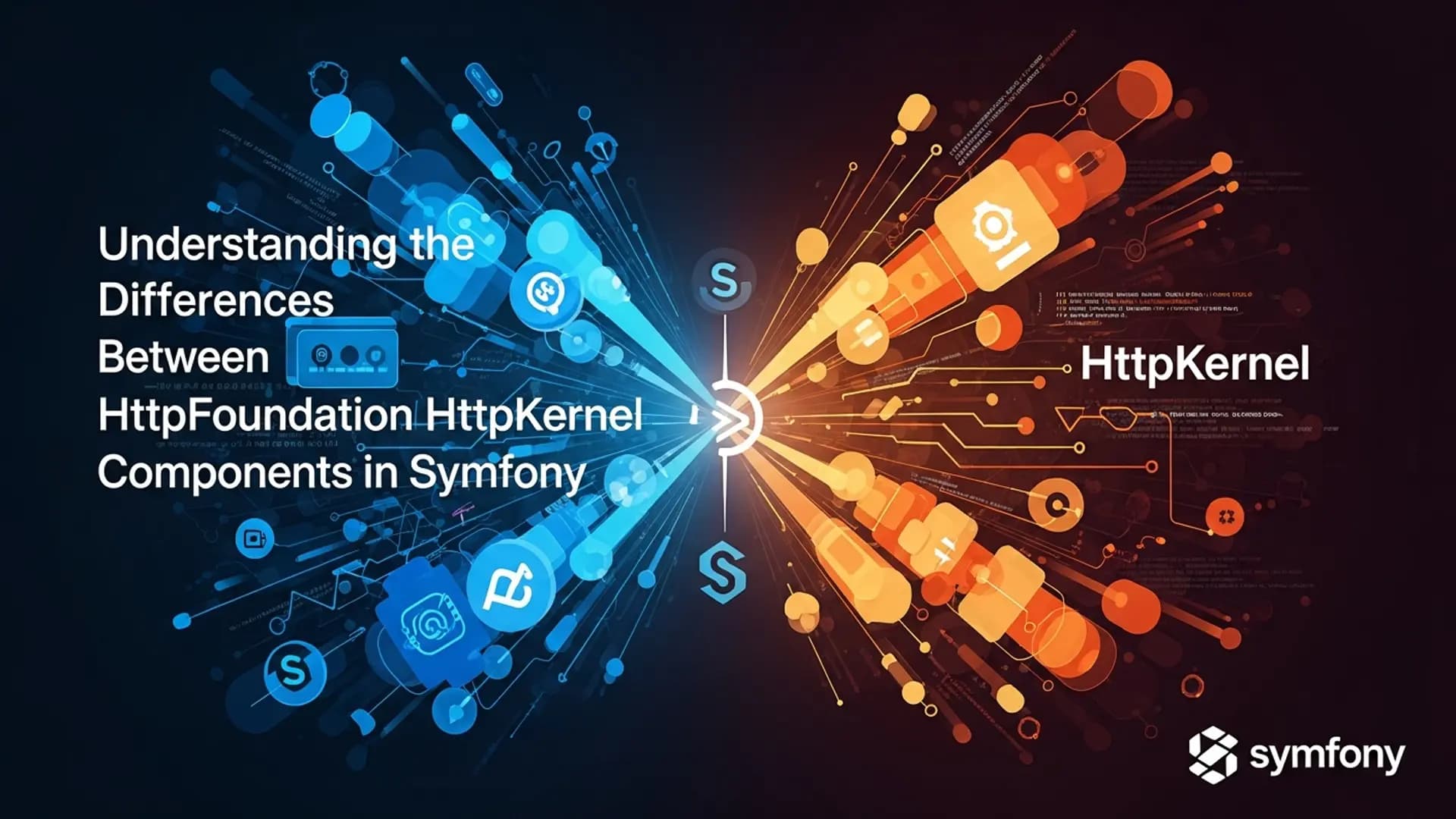
As a Symfony developer preparing for the certification exam, it's crucial to understand the nuances between HttpFoundation and HttpKernel components in Symfony. These components play a vital role in handling HTTP requests and responses, influencing how you structure your applications and handle logic. Let's delve into the main differences between HttpFoundation and HttpKernel to solidify your understanding and enhance your Symfony skills.
Exploring HttpFoundation and HttpKernel Components
Before we dive into the key distinctions, let's briefly explore what each component entails:
HttpFoundation: The HttpFoundation component provides a set of classes to work with HTTP requests and responses. It encapsulates the request and response objects, making it easier to manipulate and interact with HTTP data within your Symfony application.
HttpKernel: On the other hand, the HttpKernel component acts as the core of the Symfony framework, handling the request-response flow. It manages the request lifecycle, dispatches events, and executes the controller to generate a response for the client.
Main Differences Between HttpFoundation and HttpKernel
Now, let's explore the primary disparities between HttpFoundation and HttpKernel components:
1. Role and Functionality
The HttpFoundation component focuses on abstracting and managing HTTP-related tasks, such as handling cookies, sessions, and file uploads. It deals with the data exchange between the client and server, providing a convenient interface for working with HTTP requests and responses.
The HttpKernel component, on the other hand, is responsible for managing the request-response lifecycle within the Symfony framework. It acts as the central orchestrator, coordinating the flow of requests, executing controllers, and generating responses based on the application logic.
2. Dependency Relationship
HttpFoundation is typically used by HttpKernel to process and manipulate HTTP data. It serves as the foundation for working with HTTP-related tasks within the Symfony application. Without HttpFoundation, HttpKernel would lack essential functionalities for handling requests and responses effectively.
HttpKernel, on the other hand, relies on HttpFoundation to access and manipulate HTTP data during the request-response cycle. The interaction between these components ensures seamless handling of HTTP operations, maintaining the integrity and efficiency of the Symfony application.
3. Extensibility and Customization
While HttpFoundation provides a robust set of classes for managing HTTP data, it also allows for customization and extension to suit specific application requirements. Developers can create custom request and response objects, add middleware, or modify existing functionalities to tailor HttpFoundation to their needs.
HttpKernel, on the other hand, offers extensibility through event listeners and subscribers, allowing developers to hook into the request lifecycle and execute custom logic before or after specific events. This flexibility enables developers to modify the request-handling process without directly altering the core framework code.
Practical Examples in Symfony Applications
Understanding the differences between HttpFoundation and HttpKernel components is essential for handling complex scenarios in Symfony applications. Here are some practical examples where this knowledge is beneficial:
1. Custom Request Handling
When implementing custom logic to handle specific types of requests, developers can leverage HttpFoundation to create custom request objects with tailored functionalities. This allows for precise control over how requests are processed and responses are generated based on the application's requirements.
2. Middleware Implementation
By understanding the interaction between HttpFoundation and HttpKernel, developers can efficiently implement middleware to intercept and modify requests and responses at various stages of the request lifecycle. Middleware can be used to perform authentication, logging, or data transformation tasks seamlessly within Symfony applications.
3. Response Generation
HttpKernel plays a crucial role in generating responses based on the controller logic and application state. By working with HttpKernel effectively, developers can ensure that responses are generated accurately, handling exceptions, redirects, and content negotiation seamlessly to deliver a smooth user experience.
Conclusion: Mastering HttpFoundation and HttpKernel for Symfony Success
In conclusion, understanding the nuances between HttpFoundation and HttpKernel components in Symfony is paramount for developers aiming to excel in the Symfony certification exam. By grasping the distinct roles, dependencies, and extensibility options of these components, you can enhance your Symfony skills and build robust, efficient applications that handle HTTP requests and responses effectively.