As a Symfony developer aiming for certification, understanding the events like kernel.request, kernel.controller, and kernel.response is vital to building robust and scalable Symfony applications. In this in-depth guide, we'll explore the triggers behind these events and their significance in Symfony development.
Demystifying Symfony Events
Symfony events play a crucial role in the request-response lifecycle of Symfony applications. These events are triggered at key points during the application's execution, allowing developers to hook into the Symfony framework's core processes and customize behavior.
Understanding the triggers behind events like kernel.request, kernel.controller, and kernel.response provides developers with the flexibility to modify and extend Symfony's default behavior to meet specific application requirements.
The Anatomy of Symfony Events
Let's delve into the specific triggers for each of the essential Symfony events:
kernel.request
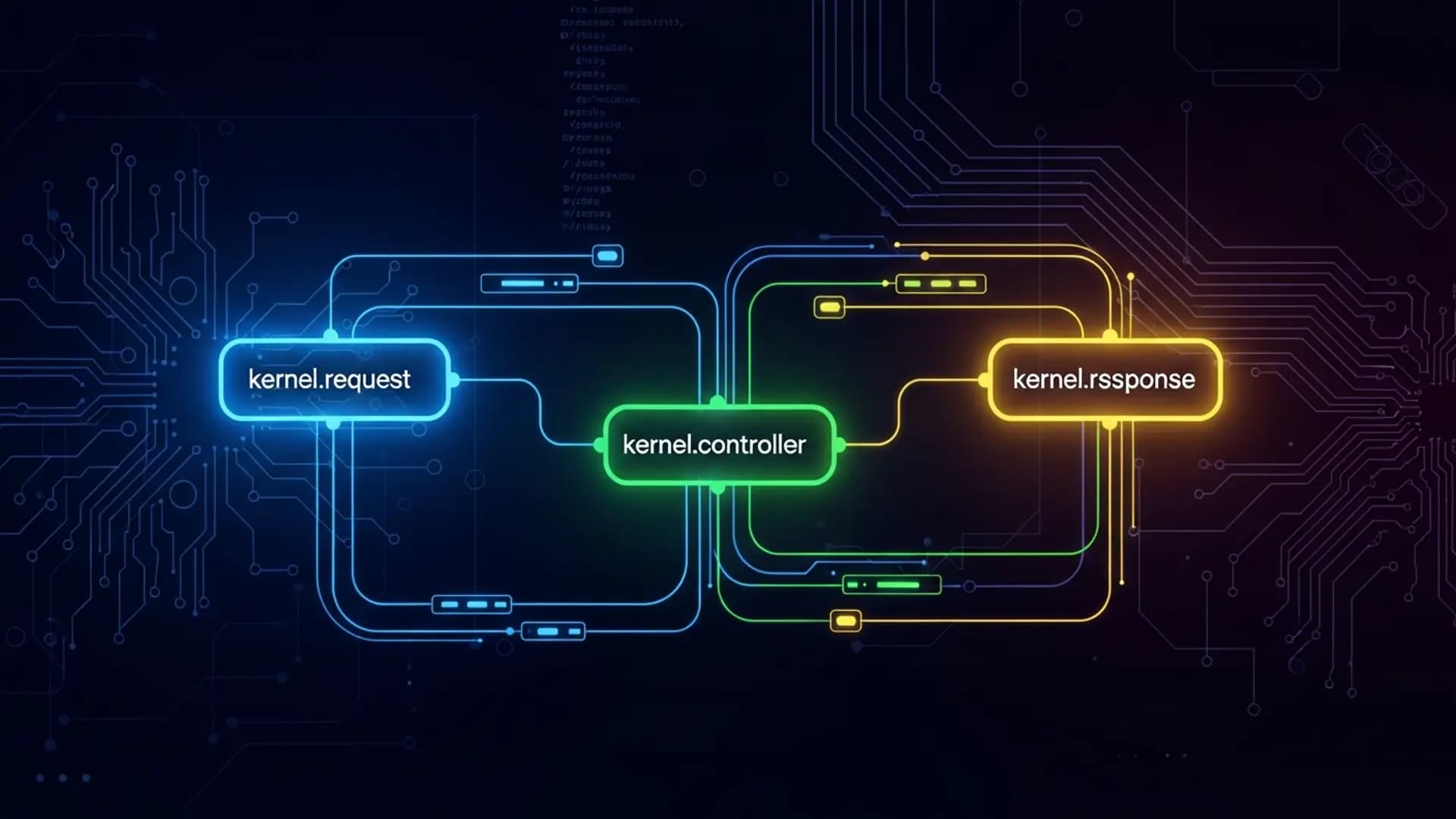
The kernel.request event is triggered at the beginning of the request handling process in Symfony. It allows developers to perform tasks such as request logging, authentication checks, or modifying request parameters before the controller is executed.
kernel.controller
The kernel.controller event is triggered just before the controller action is executed. Developers can use this event to perform actions like injecting dependencies into the controller, implementing pre-controller logic, or handling specific request conditions.
kernel.response
The kernel.response event occurs after the controller has generated a response but before the response is sent back to the client. Developers can utilize this event to modify the response content, set additional headers, or perform post-processing tasks before the response is finalized.
Practical Examples in Symfony
Let's explore how these events can be leveraged in real-world Symfony applications:
Complex Conditions in Services
By hooking into the kernel.request event, developers can apply custom logic to services based on specific request parameters or conditions, enhancing the flexibility and reusability of service components.
Logic within Twig Templates
Using the kernel.controller event, developers can preprocess data or perform calculations within Twig templates before rendering the final output, enabling dynamic content generation based on controller-specific requirements.
Building Doctrine DQL Queries
With the kernel.response event, developers can intercept the generated Doctrine query results, apply additional filters or transformations, and optimize query performance before sending the response back to the client, ensuring efficient data retrieval and processing.
Why Mastering Symfony Events is Crucial
A deep understanding of Symfony events like kernel.request, kernel.controller, and kernel.response is essential for passing the Symfony certification exam and excelling in Symfony development. By harnessing the power of these events, developers can create highly customized and efficient Symfony applications tailored to specific requirements.