Understanding HTTP status codes is crucial for Symfony developers, especially when dealing with deleted resources in web applications.
The Importance of HTTP Status Codes
HTTP status codes provide essential information about the result of a client's request to a server. They play a vital role in RESTful APIs, indicating whether a request was successful, failed, or if further action is needed. For Symfony developers, understanding these codes is not just about compliance; it's about enhancing user experience and maintaining robust application architecture.
Which Status Code for Deleted Resources?
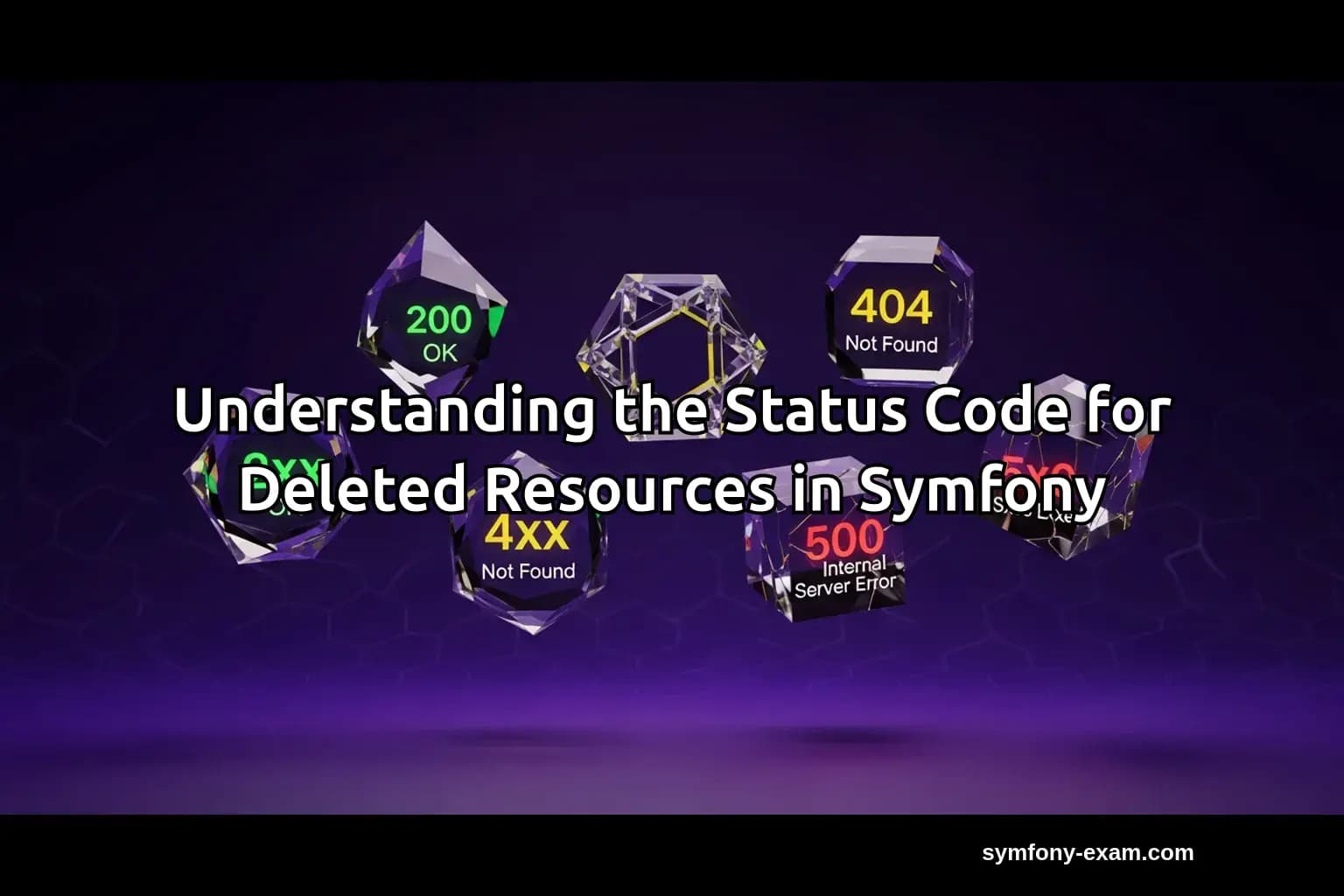
When a request is made to a resource that has been deleted, the appropriate HTTP status code to return is 410 Gone. This status code explicitly indicates that the resource requested is no longer available and will not be available again.
In contrast, a 404 Not Found status code is often returned when a resource does not exist but could potentially be created in the future. The distinction between these two codes is crucial for proper RESTful API design.
Practical Symfony Implementation
In a Symfony application, you might encounter scenarios where a resource has been deleted, and you need to handle the request appropriately. Here’s how you can implement this using Symfony's controller:
<?php
// src/Controller/ResourceController.php

namespace App\Controller;

use App\Entity\Resource;
use Doctrine\ORM\EntityManagerInterface;
use Symfony\Component\HttpFoundation\Response;
use Symfony\Component\Routing\Annotation\Route;

class ResourceController
{
    private $entityManager;

    public function __construct(EntityManagerInterface $entityManager)
    {
        $this->entityManager = $entityManager;
    }

    /**
     * @Route("/resource/`{id}`", methods={"GET"})
     */
    public function getResource($id): Response
    {
        $resource = $this->entityManager->getRepository(Resource::class)->find($id);

        if (!$resource) {
            return new Response('Resource not found', Response::HTTP_NOT_FOUND);
        }

        // Assuming we have logic here to check if the resource has been deleted
        if ($resource->isDeleted()) {
            return new Response('Resource is gone', Response::HTTP_GONE);
        }

        // Return the resource normally if not deleted
        return new Response('Resource found', Response::HTTP_OK);
    }
}
In the example above, we check if the resource has been deleted. If it has, we return a 410 Gone response, effectively communicating the state of the resource to the client.
Handling Deleted Resources in Twig
When displaying resources in a Twig template, you should also consider how to handle cases where resources may have been deleted. A common approach is to check the status in your controller and pass a variable to the template indicating the resource's state.
{% if resource.isDeleted %}
    <div class="alert alert-warning">This resource has been deleted.</div>
{% else %}
    <h1>{{ resource.name }}</h1>
    <p>{{ resource.description }}</p>
{% endif %}
This code snippet ensures that users are informed about the resource's status directly in the UI, improving the overall user experience.
Best Practices for Managing Deleted Resources
Here are some best practices for handling deleted resources effectively:
1. Use the Correct Status Code: Always return 410 Gone for deleted resources to provide clear communication to the client.
2. Maintain Clear API Documentation: Document your API endpoints, indicating the expected status codes for various scenarios, including deleted resources.
3. Implement Logical Deletion: Consider implementing soft deletes, where the resource is marked as deleted without being removed from the database. This allows for easier recovery and auditing.
4. Validate Resource Existence: Always check if a resource exists before attempting to interact with it to avoid unnecessary errors.
5. Leverage Symfony's Exception Handling: Use Symfony's built-in exception handling to manage and customize the responses for deleted resources.
Conclusion: The Impact of Correct Status Codes
Correctly handling HTTP status codes, particularly when dealing with deleted resources, is essential for Symfony developers. The choice of 410 Gone over 404 Not Found can significantly affect how clients interact with your API and the overall user experience.
As you prepare for your Symfony certification, mastering these concepts will not only help you pass the exam but also enable you to write more robust and user-friendly applications. Understanding the nuances of HTTP status codes is a key part of that journey.
Further Reading
To deepen your understanding, consider exploring these related topics:
PHP Type System, Advanced Twig Templating, Doctrine QueryBuilder Guide, Symfony Security Best Practices, Understanding HTTP Status Codes, and RESTful API Design Principles.
For more information on HTTP status codes, refer to the MDN Web Docs.