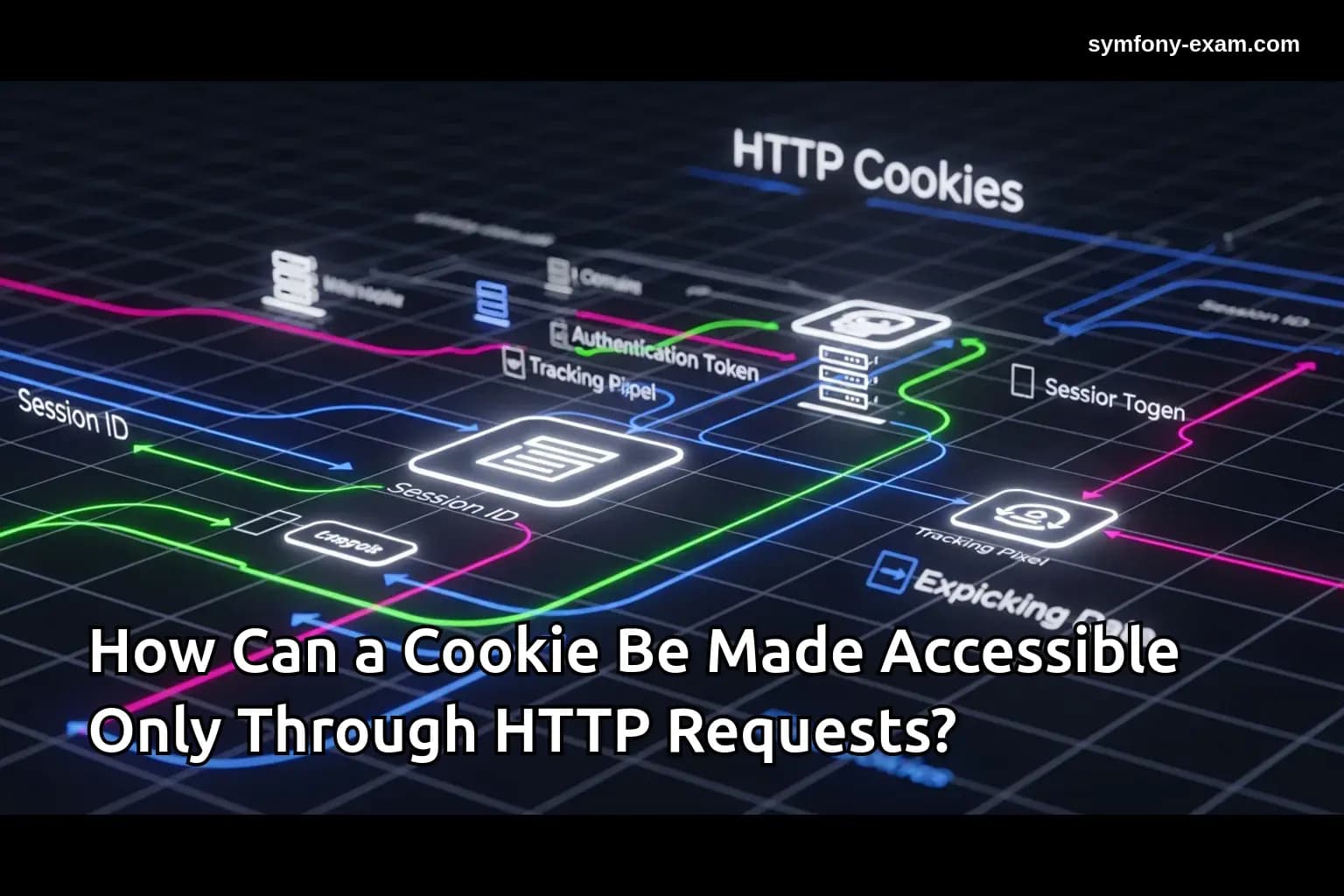
Session management is a critical aspect of web application development. In Symfony, understanding how HTTP responses can utilize the Set-Cookie header is essential for developers preparing for certification.
What is the Set-Cookie Header?
The Set-Cookie header is an HTTP response header used to send cookies from the server to the client's browser. These cookies are then stored and sent back to the server with subsequent requests. This mechanism is fundamental for session management, allowing servers to remember users across different requests.
The syntax of the Set-Cookie header typically looks like this:
Set-Cookie: sessionId=abc123; Path=/; HttpOnly; Secure; SameSite=Strict
In this example, the cookie named sessionId is set with various attributes that enhance security and define its scope.
Why is Set-Cookie Important for Symfony Developers?
For Symfony developers, understanding the Set-Cookie header is crucial for several reasons:
First, it enables effective session management, which is essential in modern web applications where user experiences rely heavily on maintaining state. Secondly, proper handling of cookies can strengthen security against attacks such as session hijacking.
In Symfony, the Set-Cookie header is typically managed using the session component. Here's how you might create a session and set a cookie:
use Symfony\Component\HttpFoundation\Session\Session;
$session = new Session();
$session->start();
$session->set('user_id', $userId);
$response->headers->setCookie(new Cookie('sessionId', $session->getId()));
This example shows how to start a session and set a cookie in a Symfony controller, ensuring the user is recognized across requests.
Managing Cookies in Symfony: Practical Examples
In Symfony applications, you might encounter various scenarios where managing cookies is essential. Here are a few practical examples:
1. Customizing Cookie Attributes: When setting cookies, you can customize attributes such as expiration time and security settings. Here’s how:
$cookie = new Cookie('user_prefs', json_encode($preferences), time() + 3600, '/', null, true, true);
$response->headers->setCookie($cookie);
In this case, we set an expiration time of one hour and made the cookie secure and HTTP-only.
2. Deleting Cookies: Sometimes you need to delete a cookie. This is done by setting a past expiration date:
$response->headers->clearCookie('sessionId');
This effectively removes the cookie from the client's browser.
3. Accessing Cookies in Symfony: You can easily access cookies sent by the client:
$sessionId = $request->cookies->get('sessionId');
This allows you to retrieve the session ID for further processing in your application.
Best Practices for Using Set-Cookie in Symfony
When working with cookies in Symfony, consider these best practices:
1. Use Secure Attributes: Always set the Secure and HttpOnly flags on cookies to minimize security risks.
2. Define the Path and Domain: Specify the Path and Domain attributes to limit the scope of your cookies, reducing vulnerabilities.
3. Implement Expiration Policies: Set appropriate expiration times for cookies to ensure they do not linger longer than necessary, which can be a security concern.
4. Handle Cookie Data Carefully: Be cautious with the data you store in cookies, especially sensitive information. Always consider encrypting the data stored in cookies.
Handling Complex Conditions in Services
In Symfony, you might find yourself needing to handle complex conditions based on cookie values. For instance, consider a scenario where a service checks user preferences stored in a cookie:
class UserPreferenceService {
    public function getUserPreferences(Request $request) {
        $preferences = $request->cookies->get('user_prefs');
        if ($preferences) {
            return json_decode($preferences, true);
        }
        return [];
    }
}
This service retrieves user preferences from the cookie, allowing you to adapt application behavior based on user choices.
Logic Within Twig Templates
When rendering views with Twig, you might want to adjust the output based on cookie values. For example:
{% if app.request.cookies.get('user_prefs') is not empty %}
    {# Render personalized content #}
    <div>Welcome back, valued user!</div>
{% else %}
    <div>Welcome, guest!</div>
{% endif %}
This snippet checks if a cookie exists and adjusts the output accordingly, enhancing the user experience.
Conclusion: Mastering Session Management for Symfony Certification
In conclusion, understanding how to use the Set-Cookie header for session management is vital for Symfony developers. Mastery of this topic not only prepares you for the certification exam but also enhances your ability to build secure and user-friendly applications.
For a deeper dive into related topics, consider exploring our articles on PHP Type System, Advanced Twig Templating, Doctrine QueryBuilder Guide, and Symfony Security Best Practices.
By implementing the techniques discussed in this article, you'll be well-equipped to handle session management effectively and confidently approach the Symfony certification exam.