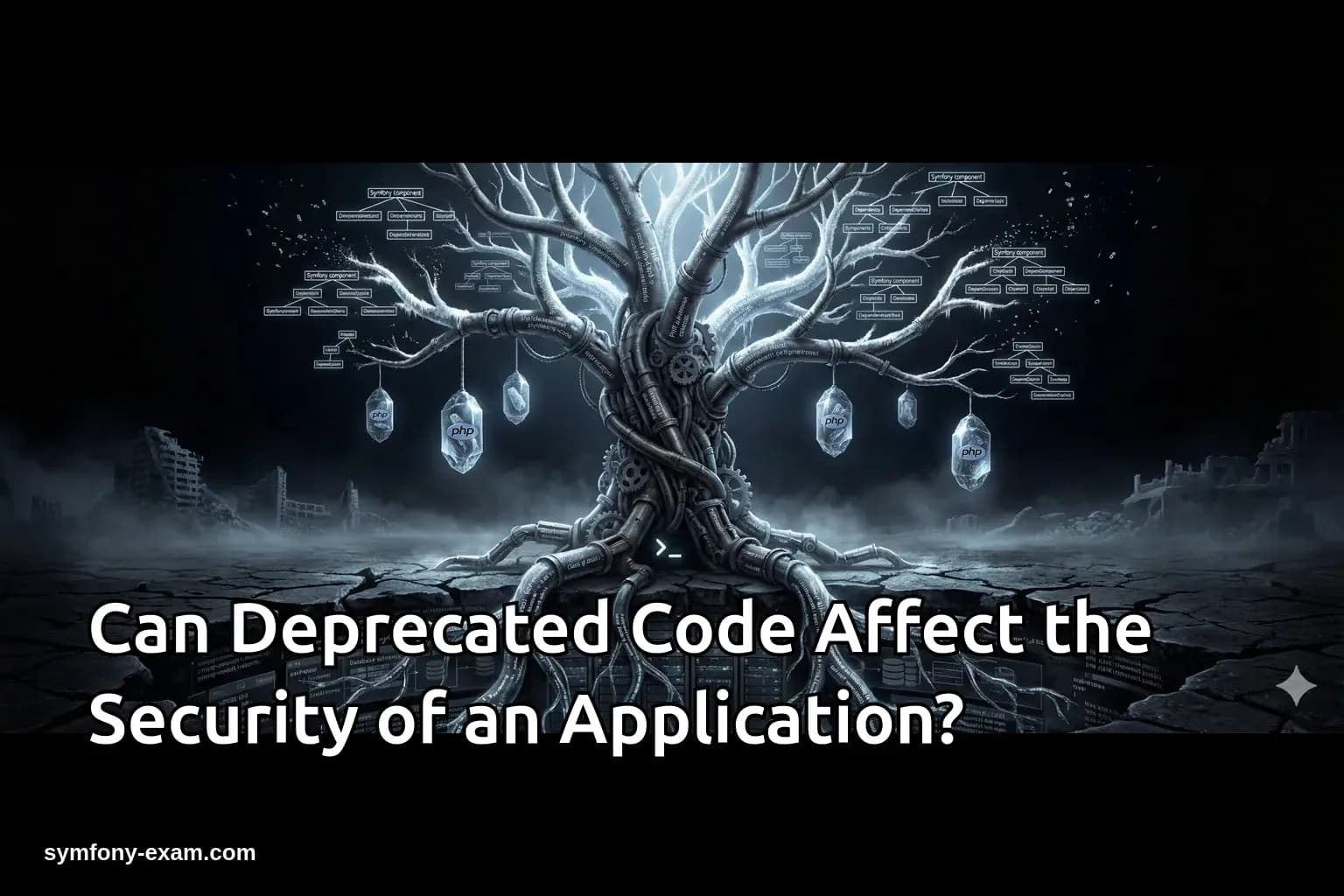
Can Deprecated Code Affect the Security of an Application?
As a Symfony developer preparing for certification, understanding the intricacies of code quality and security is paramount. One often overlooked aspect in this regard is the impact of deprecated code on application security. This article delves into the nuances of deprecated code, illustrating through practical examples how it can inadvertently introduce vulnerabilities into your application.
Understanding Deprecated Code
What is Deprecated Code?
Deprecated code refers to features, methods, or practices that have been superseded by newer alternatives but are still present in the codebase. These elements are typically marked for removal in future versions of the framework or language. While they may still function, relying on deprecated code poses risks, particularly concerning security and maintainability.
Why is Deprecated Code a Concern for Symfony Developers?
For Symfony developers, working with deprecated code can lead to several issues:
- Vulnerability Exposure: Deprecated features may have known vulnerabilities that are not patched in future releases.
- Lack of Support: As Symfony evolves, deprecated features are eventually removed, leading to potential breakage in applications that rely on them.
- Code Quality: Deprecated code can lead to confusion and increased technical debt, making it harder to maintain and secure the application.
How Deprecated Code Can Introduce Security Vulnerabilities
1. Exposure to Known Vulnerabilities
When a method or feature is marked as deprecated, it often means that vulnerabilities have been identified, and the framework maintainers recommend alternatives. For instance, consider the case of a deprecated service in Symfony that handles user authentication.
Example: Deprecated Authentication Service
// Deprecated: Symfony\Component\Security\Core\User\UserProviderInterface
use Symfony\Component\Security\Core\User\UserProviderInterface;

class UserProvider implements UserProviderInterface
{
    public function loadUserByUsername($username)
    {
        // Implementation
    }

    public function refreshUser(UserInterface $user)
    {
        // Implementation
    }

    public function supportsClass($class)
    {
        return User::class === $class;
    }
}
In this example, the UserProviderInterface may have been deprecated due to security flaws in its implementation. Continuing to use this interface could expose your application to vulnerabilities that could have been mitigated by adopting a newer, more secure method.
2. Exploiting Deprecated Features
Attackers often scour codebases for deprecated functions or methods that could be exploited. Deprecated methods may not receive security patches, and if an attacker identifies a vulnerability, they can exploit it without fear of the feature being updated.
Example: Using Deprecated Twig Functions
{# Deprecated: Twig function `|raw` can lead to XSS if not used carefully #}
{{ content|raw }}
In this Twig template, using the |raw filter can lead to Cross-Site Scripting (XSS) vulnerabilities if content includes untrusted input. Continuing to use deprecated filters or functions without proper validation can open the door for security exploits.
3. Confusion and Maintenance Challenges
Maintaining deprecated code can lead to confusion among team members, especially in larger projects. New developers may not be aware of the implications of using deprecated methods, leading to inconsistencies and potential security gaps.
Example: Complex Conditions in Services
public function calculateDiscount($user)
{
    // Deprecated: Using old logic to determine the discount
    if ($user->isPremium() || $user->hasLoyaltyCard()) {
        return 20; // 20% discount
    }
    return 0; // No discount
}
The logic in this service may look straightforward, but if the isPremium() or hasLoyaltyCard() methods are deprecated, relying on them could lead to incorrect discount calculations and subsequently, financial vulnerabilities.
Best Practices to Mitigate Risks of Deprecated Code
1. Regularly Update Dependencies
Keeping your Symfony application and its dependencies up to date is crucial. Regular updates ensure that you benefit from security patches and enhancements. Utilizing tools like Composer can help manage and update packages effectively.
composer update
2. Monitor Symfony's Deprecation Logs
Symfony provides a way to log deprecated features used in your application. Monitoring these logs can help you identify and refactor deprecated code to more secure alternatives.
// In your services.yaml
parameters:
    kernel.deprecation_logging: true
3. Perform Code Reviews
Establish a code review process within your team to catch deprecated code before it enters the main codebase. Encourage team members to review code for deprecated practices and suggest alternatives.
4. Adopt Secure Coding Practices
Integrate secure coding practices into your development workflow. For instance, always validate and sanitize input, avoid using raw output in templates, and follow Symfony's security guidelines.
Practical Examples of Refactoring Deprecated Code
Example 1: Refactoring Deprecated Services
Consider an application that uses a deprecated service for handling authentication. Refactoring to use the recommended modern service can enhance security.
Before Refactoring
use Symfony\Component\Security\Core\User\UserProviderInterface;

class AuthService
{
    private $userProvider;

    public function __construct(UserProviderInterface $userProvider)
    {
        $this->userProvider = $userProvider;
    }

    // Other methods...
}
After Refactoring
use Symfony\Component\Security\Core\User\UserProviderInterface;
use Symfony\Component\Security\Core\User\User;

class AuthService
{
    private $userProvider;

    public function __construct(UserProviderInterface $userProvider)
    {
        $this->userProvider = $userProvider;
    }

    public function loadUser(string $username): ?User
    {
        return $this->userProvider->loadUserByUsername($username);
    }
}
In this refactored code, the UserProviderInterface may have been replaced with a newer interface, ensuring that the application is using the latest security features.
Example 2: Updating Twig Templates
In a Twig template, you can replace deprecated filters with safer alternatives.
Before Updating
{{ content|raw }}
After Updating
{{ content|e }} {# Escape output to prevent XSS #}
By using the |e filter, you mitigate the risk of XSS attacks while still rendering the content safely.
Conclusion
As you prepare for the Symfony certification exam, recognizing the impact of deprecated code on application security is vital. Deprecated features can introduce vulnerabilities, and understanding how to identify and refactor them will enhance both your application’s security posture and your development skills.
By regularly updating dependencies, monitoring deprecation logs, and adopting secure coding practices, you can mitigate the risks associated with deprecated code. Additionally, practical refactoring examples illustrate how to transition to more secure alternatives effectively.
Emphasizing security in your coding practices not only prepares you for the Symfony certification but also equips you with the knowledge to build robust, secure applications in your professional career. Stay vigilant against deprecated code and prioritize security to ensure the integrity of your Symfony applications.