Understanding the 403 Forbidden status code is essential for Symfony developers, especially when preparing for certification. This status code indicates that the server understands the request but refuses to authorize it, making it a critical concept in web application security and user experience.
What Does 403 Forbidden Mean?
The 403 Forbidden status code is part of the HTTP response status codes that indicate the server's response to a client's request. Unlike a 404 Not Found error, where the resource is unavailable, a 403 Forbidden response signifies that the server understands the request but refuses to fulfill it due to client-related reasons.
For developers, this status code is crucial as it reflects on the security policies implemented within the application. It raises questions about user permissions, authentication, and overall access control mechanisms.
Is It a Client Error?
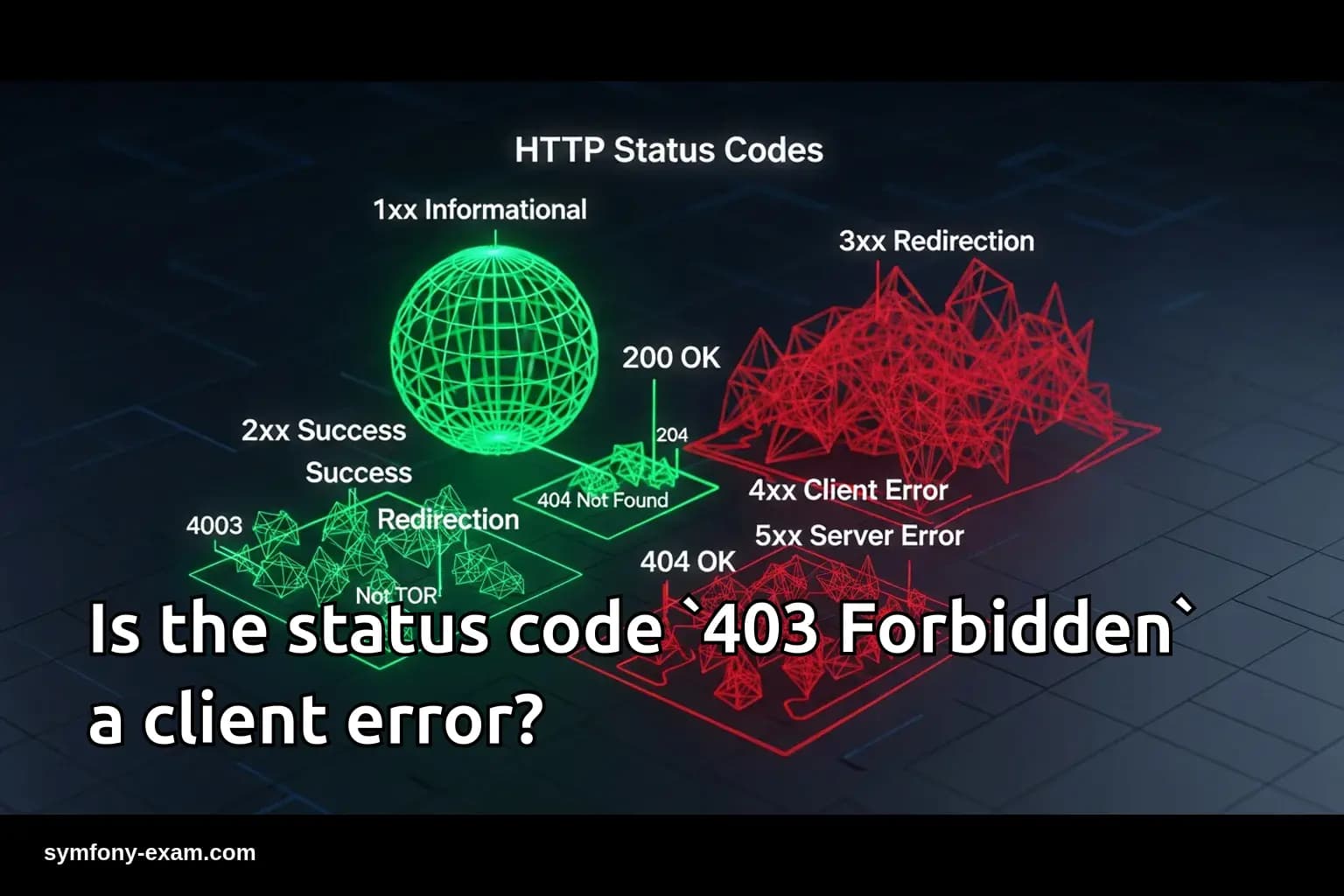
To categorize the 403 Forbidden status code, we need to consider the context of client errors. The HTTP status codes are categorized into five classes, with 4xx codes representing client errors. A 403 falls under this category, indicating that the client has made a valid request, but the server is refusing action due to various reasons such as lack of proper authentication or insufficient permissions.
In Symfony applications, understanding this distinction is vital for implementing effective security and authorization mechanisms. It also helps developers troubleshoot access issues encountered by users.
Real-World Symfony Scenarios
In Symfony, encountering a 403 Forbidden error can arise from various situations. Here are a few practical examples:
1. Access Control in Controllers: When defining routes, developers often need to restrict access based on user roles. For example:
<?php
// Example of controller method with access control
/**
 * @Route("/admin", name="admin_dashboard")
 * @IsGranted("ROLE_ADMIN")
 */
public function adminDashboard()
{
    return $this->render('admin/dashboard.html.twig');
}
In this example, users without the ROLE_ADMIN will receive a 403 Forbidden response when trying to access the admin dashboard. This is an essential pattern to ensure that only authorized users can access sensitive parts of your application.
2. Twig Template Logic: Sometimes, the logic within Twig templates can lead to 403 errors based on user permissions:
{% if is_granted('ROLE_ADMIN') %}
    <a href="{{ path('admin_dashboard') }}">Admin Dashboard</a>
{% else %}
    <p>You do not have permission to access this page.</p>
{% endif %}
In this scenario, if a user without the correct role tries to access the link, they will be denied access, resulting in a 403 response. This emphasizes the importance of checking permissions before rendering sensitive links.
3. Doctrine DQL Queries: When fetching data based on user roles, a poorly structured query can also lead to forbidden access. Consider the following DQL example:
<?php
$query = $entityManager->createQuery(
    'SELECT u FROM App\Entity\User u WHERE u.role = :role'
)->setParameter('role', 'ROLE_USER');
If a user attempts to execute this query without sufficient permissions, they might be blocked from accessing certain data, leading to a 403 response. This highlights the importance of ensuring that queries respect the user's permissions.
Handling 403 Forbidden Responses
To effectively manage 403 Forbidden responses in a Symfony application, consider the following best practices:
1. Custom Error Pages: Implement custom error pages for 403 responses. This enhances user experience by providing clear communication about the access issue rather than a generic error page.
<?php
// src/EventListener/ExceptionListener.php
namespace App\EventListener;

use Symfony\Component\HttpFoundation\Response;
use Symfony\Component\HttpKernel\Event\ExceptionEvent;

class ExceptionListener
{
    public function onKernelException(ExceptionEvent $event)
    {
        $exception = $event->getThrowable();
        if ($exception instanceof AccessDeniedException) {
            $response = new Response();
            $response->setContent('Access Denied: You do not have permission to access this resource.');
            $response->setStatusCode(Response::HTTP_FORBIDDEN);
            $event->setResponse($response);
        }
    }
}
In this code, we capture access denied exceptions and provide a user-friendly response.
2. Logging: Ensure that all 403 Forbidden responses are logged appropriately. This can help in auditing user activities and identifying any potential security breaches.
3. User Feedback: Provide informative feedback to users when they encounter a 403 error. This can be as simple as a message indicating why access was denied, guiding them on what to do next.
Conclusion: The Importance of Understanding 403 Forbidden
Understanding the 403 Forbidden status code is crucial for Symfony developers, especially when preparing for certification. It reflects the importance of proper access control and security management within applications. By ensuring that you can effectively handle and troubleshoot 403 responses, you demonstrate a robust grasp of Symfony's security practices, which is essential for writing secure, professional applications.
As you continue to prepare for your Symfony certification, remember to explore related topics such as and . These resources will help deepen your understanding of how to manage permissions, roles, and access control effectively.