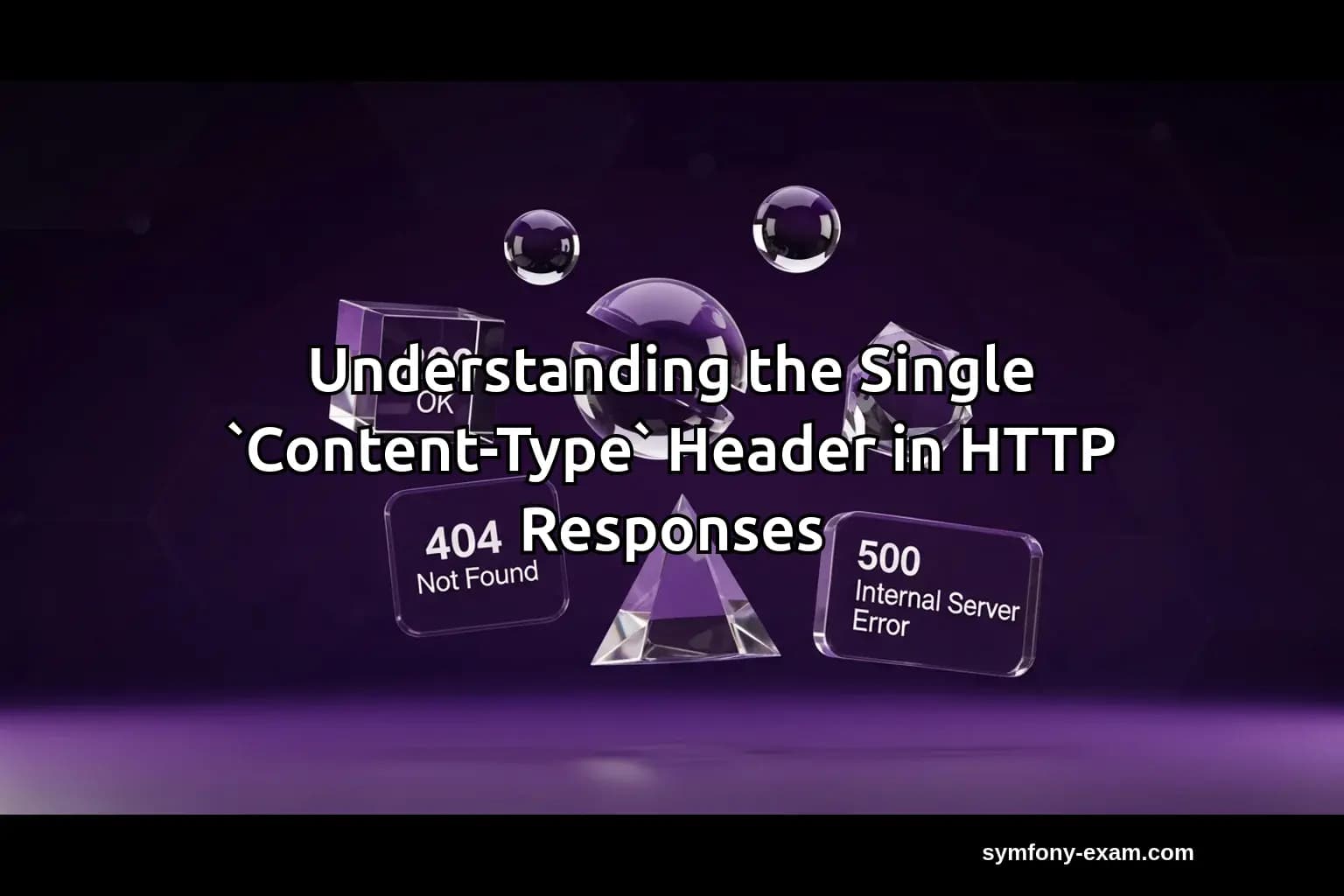
Understanding the Status line in an HTTP response is crucial for Symfony developers, especially when preparing for the certification exam. This article delves into its components, significance, and practical applications.
What is the Status Line in an HTTP Response?
The Status line is a foundational element of an HTTP response. It serves as the first line in the response message, providing essential information about the outcome of the client's request. The format of the Status line is as follows:
HTTP/1.1 200 OK
This line consists of three parts:
1. HTTP Version: Indicates the version of HTTP being used, such as HTTP/1.1 or HTTP/2.
2. Status Code: A three-digit number representing the result of the request.
3. Reason Phrase: A brief textual description of the status code.
For instance, a typical Status line might look like:
HTTP/1.1 404 Not Found
Importance of the Status Line for Symfony Developers
For Symfony developers, understanding the Status line is vital because it directly influences how clients interpret server responses. It contributes to the user's experience and error handling mechanisms within applications.
In Symfony, the Status line is managed through the HttpFoundation component, which allows developers to customize responses easily. For example:
use Symfony\Component\HttpFoundation\Response;

// Creating a response with a custom status code
$response = new Response();
$response->setStatusCode(403);
$response->setContent('Forbidden');
return $response;
This example illustrates how a developer can set a custom status code and message, providing clarity to the client about the nature of the response.
Common HTTP Status Codes in Symfony Applications
Understanding common HTTP status codes and their meanings can significantly enhance a developer's ability to handle responses effectively. Here are some key status codes that every Symfony developer should know:
200 OK: Request succeeded, and the server returned the requested data.
201 Created: Request succeeded, and a new resource was created.
204 No Content: Request succeeded, but there’s no content to send back.
400 Bad Request: The server cannot process the request due to a client error.
403 Forbidden: Server understood the request but refuses to authorize it.
404 Not Found: The requested resource could not be found.
500 Internal Server Error: A generic error message when the server encounters an unexpected condition.
Practical Examples of Status Lines in Symfony
Let’s look at how these status codes might be used in a Symfony application. Consider a situation where a user tries to access a restricted area of a website:
use Symfony\Component\HttpFoundation\Response;

public function restrictedArea()
{
    if (!$this->isUserAuthorized()) {
        return new Response('Access Denied', Response::HTTP_FORBIDDEN);
    }

    return new Response('Welcome to the restricted area!');
}
In this example, the response status line will return a 403 Forbidden status if the user is not authorized, clearly indicating the nature of the issue.
Handling Errors with Status Lines
Error handling is a critical aspect of web applications. Symfony provides a structured way to manage exceptions and return appropriate HTTP responses. For instance, if an exception is thrown in a controller, you can handle it gracefully:
use Symfony\Component\HttpKernel\Exception\NotFoundHttpException;

public function show($id)
{
    $item = $this->findItem($id);
    if (!$item) {
        throw new NotFoundHttpException('Item not found');
    }

    return new Response('Item found');
}
In this case, if the item is not found, Symfony will automatically return a 404 Not Found response, helping clients understand that the requested resource is unavailable.
Best Practices for Setting Status Lines
When working with the Status line in Symfony, consider the following best practices:
1. Use Meaningful Status Codes: Always select status codes that accurately reflect the outcome of the request.
2. Provide Clear Reason Phrases: Although the reason phrase is optional, providing a clear description helps clients understand the response better.
3. Handle Errors Gracefully: Implement consistent error handling that returns appropriate status codes and messages.
Conclusion: Mastering the Status Line for Symfony Certification
In conclusion, the Status line in an HTTP response plays a vital role in how clients perceive server responses. For Symfony developers preparing for the certification exam, mastering this concept will not only enhance your understanding of HTTP but also improve your ability to build robust web applications. By ensuring you effectively use status codes and reason phrases, you can create a better user experience and simplify error handling.
For further reading, consider exploring related topics such as and .