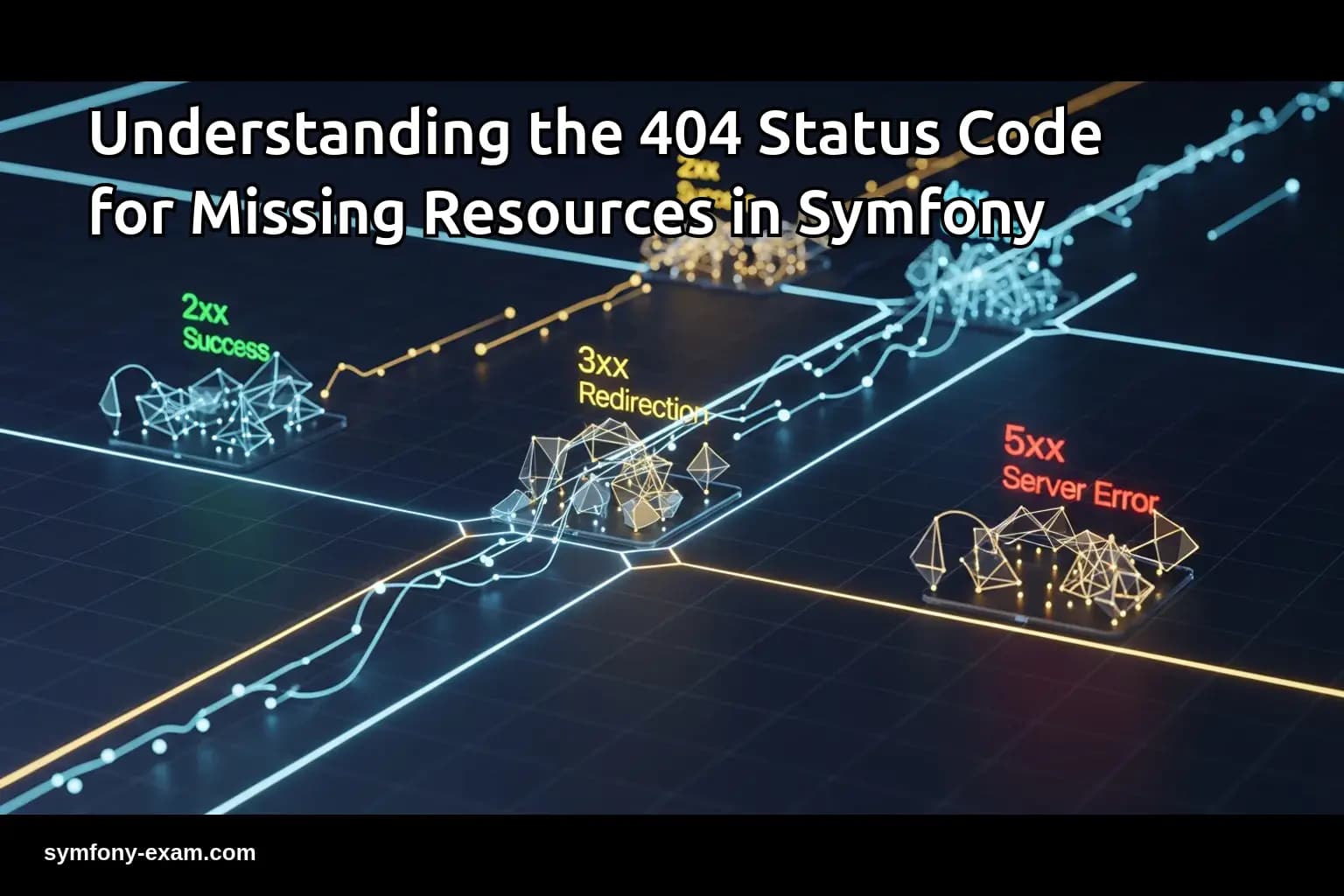
Understanding HTTP status codes is essential for Symfony developers, especially when dealing with resource management and user experience. Among these codes, the 404 status code is critical for signaling that the requested resource could not be found.
What Does the 404 Status Code Indicate?
The 404 status code, commonly referred to as "Not Found," indicates that the server cannot locate the requested resource. This response can arise from various scenarios, such as an incorrect URL, a resource that has been deleted, or a misconfiguration on the server.
For Symfony developers, understanding when and how to properly return a 404 status is vital for creating intuitive applications. An effective error handling strategy improves user experience and maintains the integrity of your application.
Practical Examples in Symfony
In a typical Symfony application, several factors can lead to a 404 status code. Here are a few examples:
Example 1: Routing Issues
If a user requests a URL that does not match any defined routes, Symfony will automatically generate a 404 error. For instance, consider the following route definition:
// src/Controller/ProductController.php
use Symfony\Bundle\FrameworkBundle\Controller\AbstractController;
use Symfony\Component\Routing\Annotation\Route;

class ProductController extends AbstractController
{
    /**
     * @Route("/product/`{id}`", name="product_show")
     */
    public function show($id)
    {
        // Logic to fetch the product
    }
}
If a user navigates to /product/999, and there is no product with ID 999, you should return a 404 response. This can be done by checking the existence of the product:
// src/Controller/ProductController.php
$product = $this->getDoctrine()->getRepository(Product::class)->find($id);
if (!$product) {
  throw $this->createNotFoundException('Product not found');
}
Example 2: Handling Deleted Resources
When a resource is deleted, it’s crucial to handle the situation gracefully. Suppose you have a blog application and a user tries to access a deleted post:
// src/Controller/BlogController.php
public function view($slug)
{
  $post = $this->getDoctrine()->getRepository(Post::class)->findOneBySlug($slug);
  if (!$post) {
      throw $this->createNotFoundException('Post not found');
  }
  // Render the view
}
In this case, you return a 404 response if the post does not exist, ensuring users do not see a broken page.
Best Practices for Handling 404 Responses
Handling 404 status codes is not just about returning an error. Here are some best practices:
1. Provide a User-Friendly Message: Instead of a generic message, create a custom 404 page that guides users back to relevant content.
2. Log 404 Errors: Keep track of 404 errors in your application logs. This helps identify broken links and improve overall application quality.
3. Use Redirects Wisely: If resources have been moved, consider implementing redirects to guide users to the new location rather than simply showing a 404.
Debugging 404 Errors in Symfony
When you encounter a 404 error in your Symfony application, debugging is essential. Here are some tips:
1. Check Route Definitions: Ensure that your routes are correctly defined and that the URL matches the expected parameters.
2. Use Symfony’s Debugging Tools: Utilize the Symfony Profiler to analyze requests and responses, helping you pinpoint where things go wrong.
3. Review Server Configuration: Sometimes, server settings can lead to unexpected 404 errors. Check your .htaccess or server configuration files for issues.
Conclusion: The Importance of 404 Status Codes in Symfony Development
Understanding the 404 status code is essential for any Symfony developer. It not only affects user experience but also plays a significant role in SEO and application performance. By implementing best practices for handling 404 responses, developers can create more robust applications.
As you prepare for the Symfony certification exam, ensure you grasp the nuances of HTTP status codes, particularly the 404 status. This knowledge will demonstrate your ability to build professional and user-friendly web applications.
For further reading, check out our posts on PHP Type System, Advanced Twig Templating, Doctrine QueryBuilder Guide, and Symfony Security Best Practices. Additionally, you can refer to the official PHP documentation for more information on HTTP status codes.