As a Symfony developer preparing for certification exams, understanding the main entry point of a Symfony application is crucial. In this blog post, we will delve into why knowing the main entry point is essential, explore practical examples of its significance in Symfony applications, and provide insights to help you succeed in your certification journey.
Why is the Main Entry Point Important in Symfony?
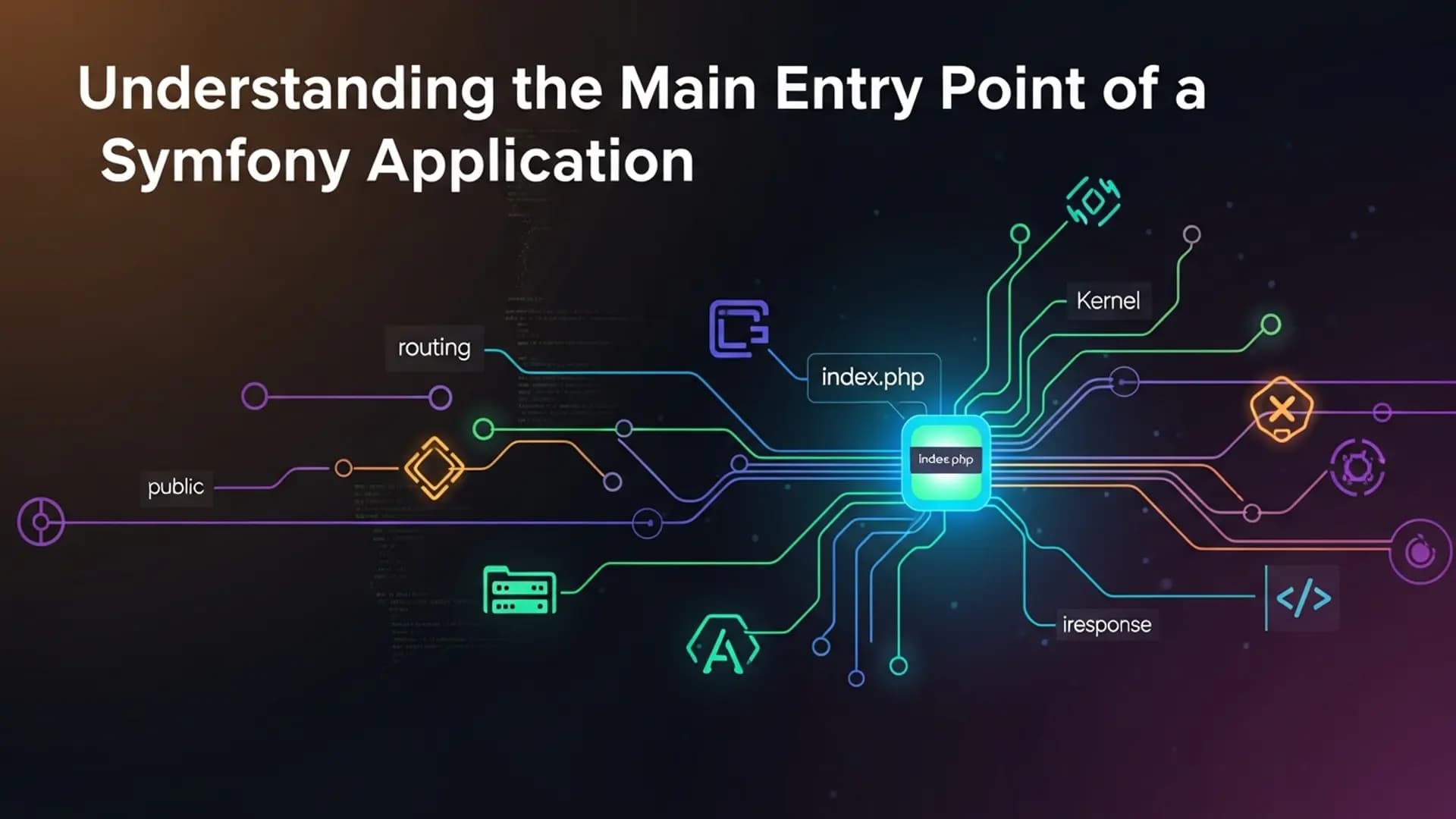
The main entry point of a Symfony application serves as the starting point for handling incoming requests and executing the application logic. It plays a pivotal role in the application's lifecycle, routing requests to the appropriate controllers, services, and components.
In Symfony, the main entry point typically resides in the public/index.php file, where the front controller initializes the Symfony kernel and bootstraps the application. Understanding this entry point is essential for configuring routes, managing dependencies, and ensuring the smooth execution of your Symfony application.
Practical Examples in Symfony Applications
Let's explore some scenarios where knowledge of the main entry point is critical in Symfony development:
1. Complex Conditions in Services: In Symfony services, you may encounter situations where specific conditions need to be met for a service to be instantiated or executed. Understanding the main entry point helps you identify where these conditions are evaluated and how services are initialized.
2. Logic within Twig Templates: Twig templates in Symfony often contain dynamic logic for rendering views. Knowledge of the main entry point allows you to trace how data is passed to templates and how template rendering is triggered within the application flow.
3. Building Doctrine DQL Queries: When working with Doctrine in Symfony, constructing complex DQL queries is a common task. Knowing the main entry point helps you understand how query builders are instantiated, queries are executed, and results are processed within the application.
Common Pitfalls and Best Practices
Avoiding pitfalls related to the main entry point is essential for maintaining a robust Symfony application. Here are some best practices to keep in mind:
Best Practice 1: Always adhere to Symfony's recommended directory structure and naming conventions to ensure the main entry point is correctly configured.
Best Practice 2: Utilize Symfony's routing configuration to define clear paths for incoming requests and map them to the appropriate controllers or actions.
Best Practice 3: Leverage Symfony's dependency injection container to manage service dependencies and promote code reusability throughout the application.
Conclusion: Mastering the Main Entry Point for Symfony Certification
In conclusion, understanding the main entry point of a Symfony application is essential for developers aiming to excel in Symfony certification exams. By grasping the significance of the main entry point, you can effectively navigate the application lifecycle, troubleshoot issues, and optimize performance in your Symfony projects.