As a Symfony developer preparing for the certification exam, understanding the kernel events is essential for mastering Symfony's core functionality and passing the exam with confidence. This blog post delves into the various kernel events in Symfony development and their significance in building robust Symfony applications.
What Are Kernel Events in Symfony?
In Symfony, kernel events are pivotal points during the application's lifecycle where developers can hook into the framework's core processes to execute custom logic. These events allow developers to modify the behavior of the application at specific stages, such as before or after routing, controller execution, and response generation.
Understanding and leveraging kernel events is crucial for customizing Symfony applications, implementing cross-cutting concerns, and integrating third-party components seamlessly.
Types of Kernel Events
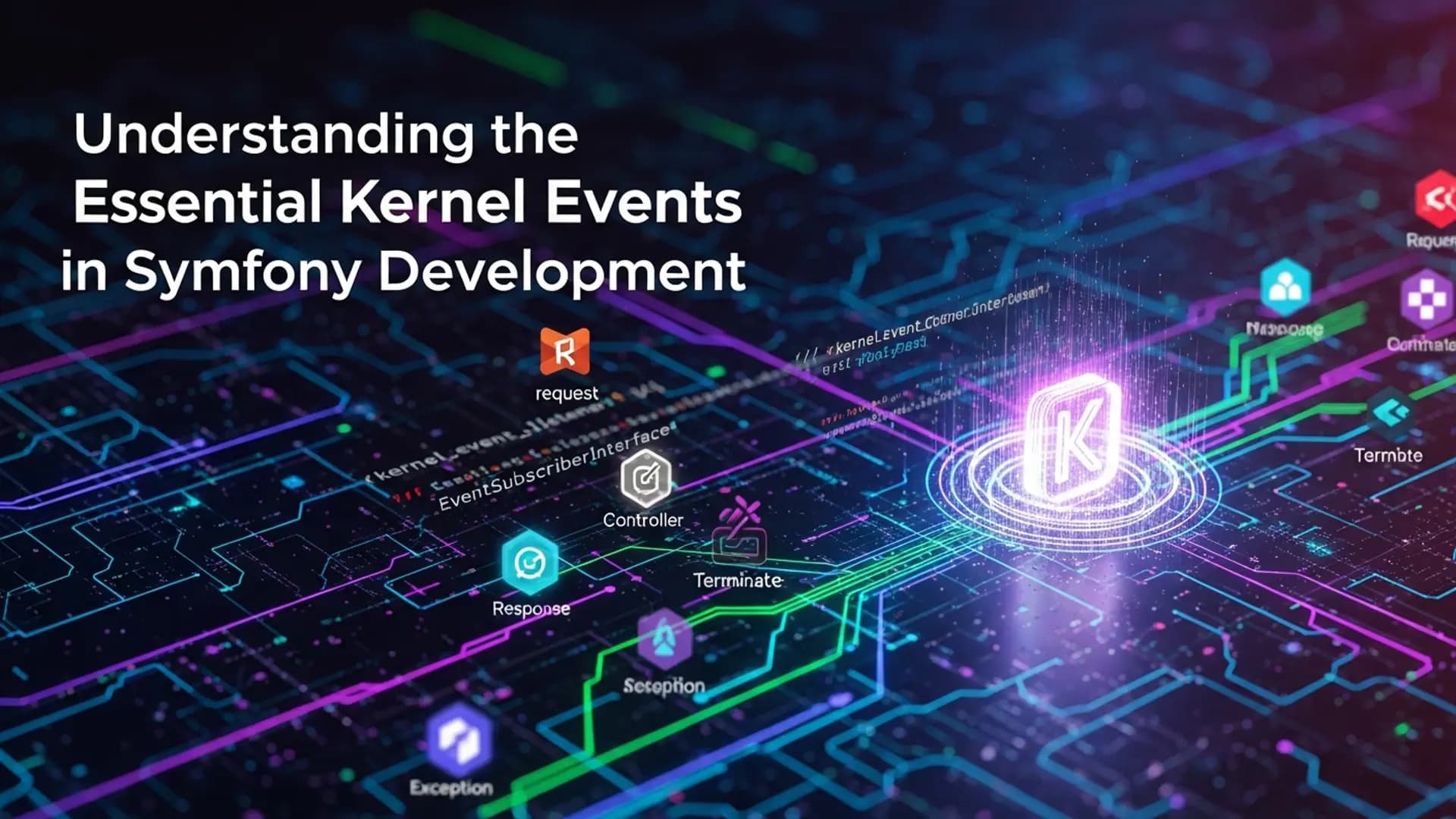
Symfony provides a wide range of kernel events that developers can utilize to enhance their applications. Some common kernel events include:
KernelEvents::REQUEST
KernelEvents::CONTROLLER
KernelEvents::RESPONSE
KernelEvents::EXCEPTION
KernelEvents::TERMINATE
Each type of kernel event serves a specific purpose and offers developers the flexibility to intervene in the application's flow at different stages.
Practical Examples of Kernel Event Usage
Let's explore how developers can leverage kernel events in real-world Symfony applications:
Example 1: Using the KernelEvents::REQUEST event to perform authentication checks before routing the request to controllers.
Example 2: Employing the KernelEvents::RESPONSE event to modify the HTTP response headers based on specific conditions.
Example 3: Handling exceptions gracefully by listening to the KernelEvents::EXCEPTION event and customizing error messages.
Best Practices for Working with Kernel Events
To make the most of kernel events in Symfony development, consider the following best practices:
Best Practice 1: Register event listeners or subscribers in a centralized location for better maintainability.
Best Practice 2: Ensure that event listeners adhere to single responsibility principles to keep code clean and manageable.
Best Practice 3: Use dependency injection to inject services into event listeners for improved testability and flexibility.
Importance of Kernel Events for Symfony Certification
Mastering kernel events in Symfony is not only beneficial for building high-quality applications but also essential for excelling in the Symfony certification exam. Demonstrating proficiency in utilizing kernel events showcases your understanding of Symfony's architecture and ability to implement advanced features in Symfony projects.