Understanding which statements about Symfony kernel events are true is crucial for developers preparing for the Symfony certification exam. Kernel events form the backbone of the Symfony HTTP request lifecycle, influencing how applications handle requests, responses, and the overall workflow. This article will cover the significance of kernel events, how they operate within Symfony, and practical examples to solidify your comprehension.
What Are Symfony Kernel Events?
Symfony kernel events are a series of events that occur during the handling of an HTTP request. They enable developers to modify request processing at various points in the lifecycle. The main events are triggered by the HttpKernel component, which is responsible for processing requests and returning responses.
Key Kernel Events
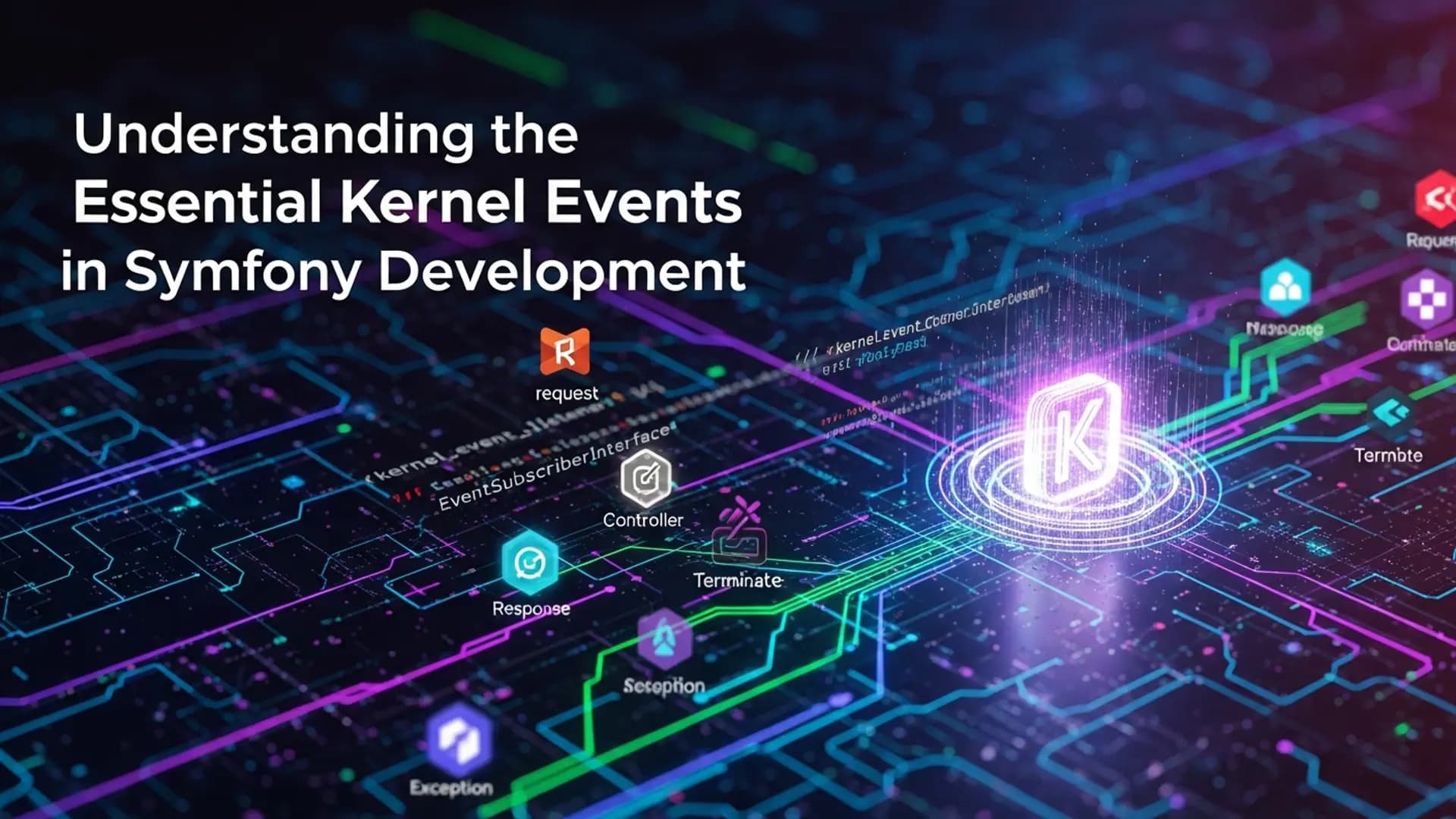
The main kernel events include:
- kernel.request: Fired at the beginning of the request handling process.
- kernel.controller: Triggered after the request is matched to a controller.
- kernel.response: Occurs just before the response is sent to the client.
- kernel.terminate: Fired after the response has been sent to the client.
These events allow developers to hook into the request lifecycle, enabling them to implement cross-cutting concerns like logging, authentication, and performance monitoring.
Importance of Kernel Events in Symfony Applications
Kernel events are vital for Symfony developers for several reasons:
- Extensibility: They allow developers to extend the core functionality of Symfony without modifying the framework itself.
- Separation of Concerns: Kernel events promote the separation of concerns by allowing different parts of the application to operate independently.
- Reusability: Event listeners can be reused across multiple parts of an application or even across different projects.
Understanding kernel events is essential for building maintainable and scalable applications in Symfony.
Examples of Using Kernel Events
To illustrate the usefulness of kernel events, let's look at some practical examples commonly encountered in Symfony applications.
Example 1: Logging with kernel.request
You may want to log every incoming request for auditing purposes. This can be achieved by subscribing to the kernel.request event.
<?php
namespace App\EventListener;

use Psr\Log\LoggerInterface;
use Symfony\Component\HttpKernel\Event\RequestEvent;

class RequestListener
{
    private $logger;

    public function __construct(LoggerInterface $logger)
    {
        $this->logger = $logger;
    }

    public function onKernelRequest(RequestEvent $event): void
    {
        $request = $event->getRequest();
        $this->logger->info('Request URL: ' . $request->getRequestUri());
    }
}
?>
In this example, the RequestListener class listens for the kernel.request event and logs the URL of each incoming request. This pattern is particularly useful for monitoring traffic and diagnosing issues.
Example 2: Modifying Responses with kernel.response
You might want to add a custom header to all responses sent from your application. By subscribing to the kernel.response event, you can modify the response before it is sent to the client.
<?php
namespace App\EventListener;

use Symfony\Component\HttpKernel\Event\ResponseEvent;

class ResponseListener
{
    public function onKernelResponse(ResponseEvent $event): void
    {
        $response = $event->getResponse();
        $response->headers->set('X-Custom-Header', 'MyValue');
    }
}
?>
This listener modifies the response by adding a custom header, which can be useful for API versioning or feature toggling.
Example 3: Handling Exceptions with kernel.exception
Handling exceptions gracefully is crucial for providing a good user experience. By listening to the kernel.exception event, you can catch unhandled exceptions and return a user-friendly response.
<?php
namespace App\EventListener;

use Symfony\Component\HttpKernel\Event\ExceptionEvent;
use Symfony\Component\HttpFoundation\Response;

class ExceptionListener
{
    public function onKernelException(ExceptionEvent $event): void
    {
        $exception = $event->getThrowable();
        $response = new Response();
        $response->setContent('Something went wrong: ' . $exception->getMessage());
        $response->setStatusCode(Response::HTTP_INTERNAL_SERVER_ERROR);

        $event->setResponse($response);
    }
}
?>
In this example, the ExceptionListener class catches exceptions and prepares a user-friendly error message, ensuring that users do not see raw error details.
Registering Event Listeners
To make your event listeners work, you need to register them in the service configuration. If you're using Symfony Flex, you can define your listeners in services.yaml:
services:
    App\EventListener\RequestListener:
        tags:
            - { name: 'kernel.event_listener', event: 'kernel.request', method: 'onKernelRequest' }
    App\EventListener\ResponseListener:
        tags:
            - { name: 'kernel.event_listener', event: 'kernel.response', method: 'onKernelResponse' }
    App\EventListener\ExceptionListener:
        tags:
            - { name: 'kernel.event_listener', event: 'kernel.exception', method: 'onKernelException' }
This configuration ensures that Symfony knows about your listeners and invokes them at the appropriate times during request processing.
Best Practices for Working with Kernel Events
When dealing with kernel events, consider the following best practices:
1. Keep Listeners Focused
Each event listener should have a single responsibility. This makes it easier to manage and test your listeners.
2. Use Priorities Wisely
Symfony allows you to set the priority of your event listeners. Higher priority listeners are executed first. Use this feature to control the order of execution for listeners that might depend on each other.
3. Avoid Heavy Processing
Listeners should not perform heavy processing tasks. Instead, delegate such tasks to services that can handle them asynchronously or in the background.
4. Document Your Listeners
Ensure that you document the purpose and behavior of each listener, especially if they modify requests or responses. This will make it easier for other developers (or future you) to understand your code.
Conclusion: Mastering Kernel Events for Certification
Understanding which statements about Symfony kernel events are true is not just an academic exercise; it is a practical necessity for any Symfony developer. Mastering these concepts helps you build robust applications and prepares you for the challenges of the Symfony certification exam.
Kernel events are a powerful feature that, when used effectively, can enhance the functionality, maintainability, and scalability of your applications. By leveraging kernel events, you can handle requests, modify responses, and manage exceptions cleanly and efficiently.
As you prepare for the Symfony certification exam, ensure you are comfortable with the various kernel events, their purposes, and how to implement them. This knowledge will not only help you pass the exam but also empower you to create high-quality applications in Symfony.