Understanding valid HTTP status codes is crucial for developers, especially those working with Symfony. This knowledge not only aids in building robust applications but also plays a significant role in preparing for the Symfony certification exam.
The Importance of HTTP Status Codes
HTTP status codes are essential for conveying the result of an HTTP request. They guide clients on how to proceed based on the response from the server.
For Symfony developers, knowing which status codes are valid helps in effectively managing responses from controllers, enhancing user experience, and debugging issues.
Overview of HTTP Status Codes
HTTP status codes are categorized into five classes, each represented by the first digit of the code:
1xx: Informational - These codes indicate that a request has been received and is being processed.
2xx: Success - These codes signify that the request was successfully received, understood, and accepted.
3xx: Redirection - These codes indicate that further action needs to be taken by the client to fulfill the request.
4xx: Client Error - These codes are used when the client seems to have made an error.
5xx: Server Error - These codes indicate that the server failed to fulfill a valid request.
Valid HTTP Status Codes
Here are some of the most common valid HTTP status codes you should be familiar with:
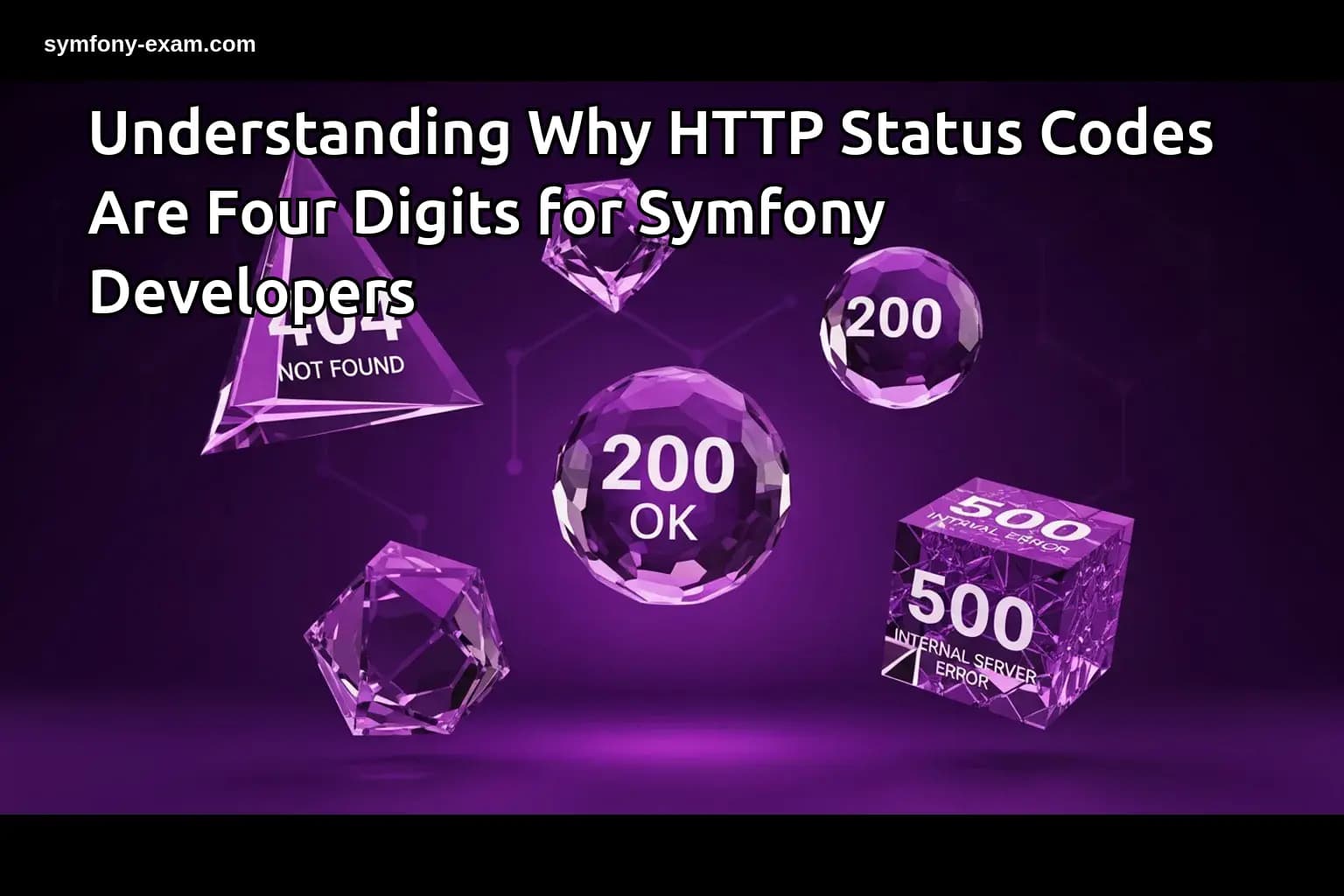
200 OK: The request has succeeded.
201 Created: The request has succeeded and has led to the creation of a resource.
204 No Content: The server successfully processed the request, but is not returning any content.
400 Bad Request: The server could not understand the request due to invalid syntax.
401 Unauthorized: The request requires user authentication.
404 Not Found: The server can not find the requested resource.
500 Internal Server Error: The server has encountered a situation it doesn't know how to handle.
Practical Symfony Examples
Let’s consider some practical scenarios where you might encounter these status codes in a Symfony application.
Handling 404 Errors in Symfony
In Symfony, you might want to return a 404 status code when a resource is not found. This can be implemented in your controller:
<?php
// src/Controller/ProductController.php

use Symfony\Component\HttpFoundation\Response;
use Symfony\Component\HttpKernel\Exception\NotFoundHttpException;

public function show($id)
{
    $product = $this->productRepository->find($id);

    if (!$product) {
        throw new NotFoundHttpException('Product not found');
    }

    return $this->render('product/show.html.twig', [
        'product' => $product,
    ]);
}
In this example, if the product is not found, a 404 Not Found response is automatically generated.
Returning a 201 Status Code
When you create a new resource, you often return a 201 status code. Here’s how you can handle it in a Symfony controller:
<?php
// src/Controller/ProductController.php

use Symfony\Component\HttpFoundation\Response;

public function create(Request $request)
{
    $product = new Product();
    // ... (set product properties from $request)

    $this->entityManager->persist($product);
    $this->entityManager->flush();

    return new Response('', Response::HTTP_CREATED);
}
In this example, after successfully creating a product, the response code 201 Created is returned.
Common Mistakes with HTTP Status Codes
Understanding HTTP status codes is crucial, but developers often make mistakes:
Using 200 for Errors: Some developers mistakenly return a 200 status code even when an error occurs. This can mislead clients and make debugging challenging.
Ignoring 3xx Codes: Developers sometimes overlook redirection codes. Properly managing redirects can significantly improve user experience.
Not Handling Exceptions: Failing to handle exceptions leads to 500 Internal Server Error responses. Always ensure that your application gracefully handles unexpected situations.
Conclusion: Mastering HTTP Status Codes for Symfony Certification
Understanding which HTTP status codes are valid and how to implement them effectively in your Symfony applications is essential for any developer aiming for certification.
Proficiency in using these codes demonstrates a solid grasp of web protocols and enhances application robustness. Make sure to review these concepts thoroughly as you prepare for your Symfony certification exam.
Further Reading and Resources
To deepen your understanding, check out these resources:
PHP Type System
Advanced Twig Templating
Doctrine QueryBuilder Guide
Symfony Security Best Practices
Official PHP Documentation on HTTP Status Codes