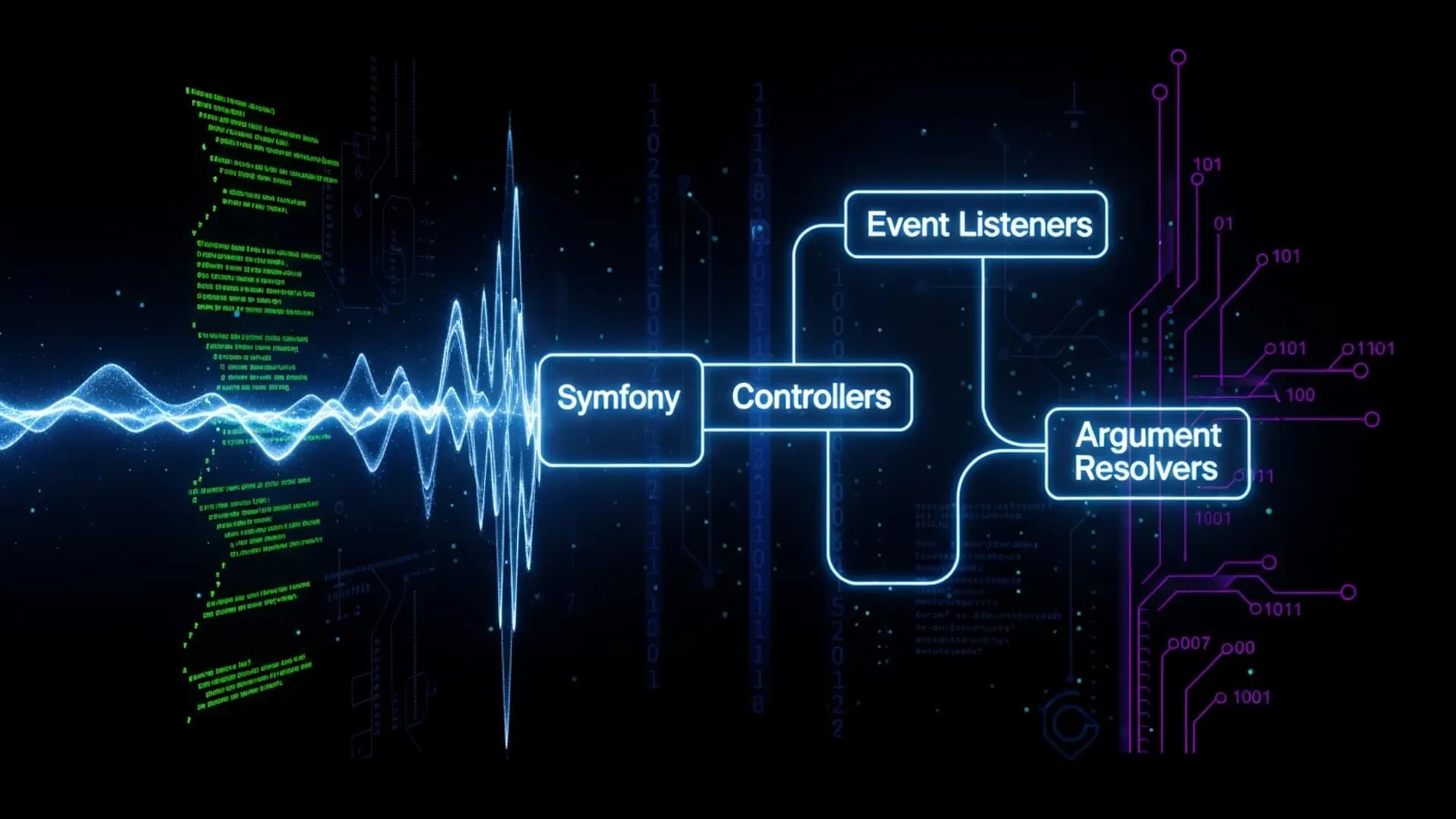
As a Symfony developer aiming for certification, understanding how classes register event listeners, controllers, and argument resolvers in a custom framework is vital. This article delves into the key concepts and practical examples to enhance your knowledge and skills.
Demystifying Symfony Components
Symfony components are the building blocks of a custom framework, providing powerful tools for developing robust web applications. In this context, knowing which class is responsible for registering event listeners, controllers, and argument resolvers is fundamental.
The Role of Event Listeners
Event listeners in Symfony allow you to respond to specific events that occur during the application's lifecycle. These events can range from kernel requests to entity lifecycle events. In a custom framework, the EventDispatcher class plays a crucial role in registering and dispatching these listeners.
Managing Controllers Effectively
Controllers in Symfony handle incoming requests, execute the necessary logic, and return a response. In a custom framework, the ControllerResolver class is responsible for mapping routes to controller actions and invoking them accordingly. Understanding how this class operates is essential for structuring your application's logic.
Harnessing the Power of Argument Resolvers
Argument resolvers in Symfony simplify the process of extracting and converting request data into controller method arguments. The ArgumentResolver class in a custom framework aids in resolving these arguments based on defined rules and constraints. Mastering this class enhances the efficiency and maintainability of your application.
Practical Examples in Symfony Applications
Consider scenarios where intricate conditions in services, complex logic within Twig templates, or intricate Doctrine DQL queries require the seamless integration of event listeners, controllers, and argument resolvers. By understanding the underlying classes in a custom framework, you can navigate and optimize these scenarios effectively.
Best Practices for Symfony Developers
When working with Symfony components in a custom framework, adhere to best practices to ensure code quality and maintainability.
Best Practice 1: Utilize event listeners to decouple application logic and enhance flexibility.
Best Practice 2: Structure controllers efficiently to maintain a clear separation of concerns and facilitate testing.
Best Practice 3: Define strict rules for argument resolvers to streamline data processing and enhance security.
Conclusion: Elevating Your Symfony Expertise
By delving into the classes responsible for event listeners, controllers, and argument resolvers in a custom framework built on Symfony components, you enhance your proficiency as a Symfony developer. This knowledge not only prepares you for the Symfony certification exam but also equips you to tackle complex challenges in Symfony applications with confidence.