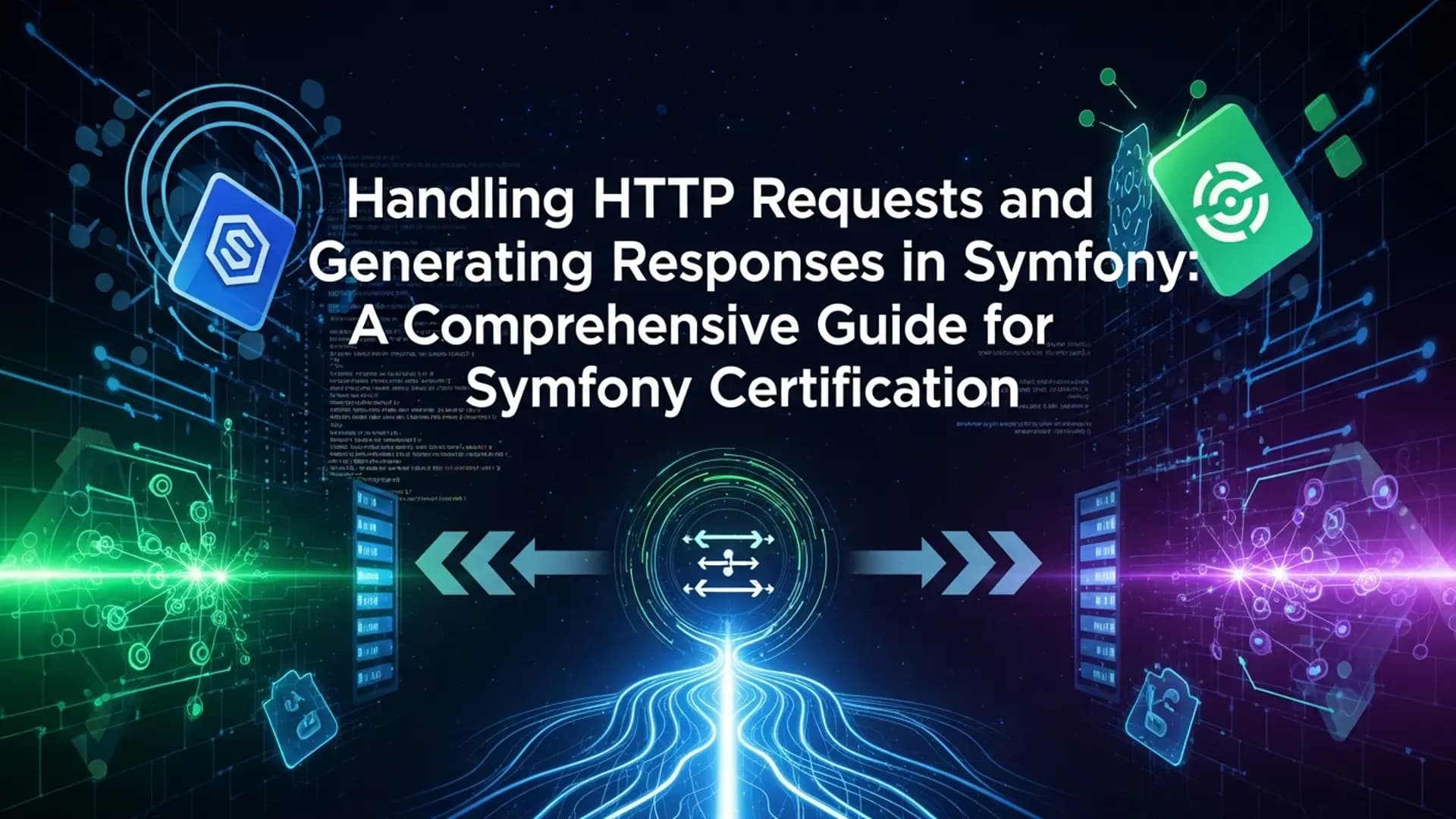
As a Symfony developer preparing for the certification exam, understanding the component responsible for handling HTTP requests and generating responses is crucial for building robust Symfony applications. In this comprehensive guide, we will delve into this essential Symfony component and explore practical examples to solidify your knowledge.
The Symfony HttpFoundation Component
At the core of handling HTTP requests and responses in Symfony lies the HttpFoundation component. This component provides an object-oriented layer to work with the HTTP protocol efficiently.
The HttpFoundation component includes classes like Request and Response, which allow developers to interact with incoming requests and craft appropriate responses.
Understanding Symfony Request and Response Objects
In a Symfony application, the Request object represents an incoming HTTP request, encapsulating data like GET and POST parameters, headers, and cookies. Developers can access and manipulate this data to tailor their application's behavior.
The Response object, on the other hand, is used to generate and send HTTP responses back to the client. It enables developers to set response headers, content, status codes, and more.
Practical Example: Handling Form Submissions
Let's consider a common scenario in Symfony where a user submits a form, triggering an HTTP POST request to the server. In the controller handling this request, you would typically create a Request object to access the form data and process it accordingly.
<?php
use Symfony\Component\HttpFoundation\Request;

public function submitForm(Request $request)
{
    $formData = $request->request->all();

    // Process the form data

    return new Response('Form submitted successfully');
}
?>
In this example, we utilize the Request object to extract the form data and generate a Response to acknowledge the successful form submission.
Leveraging the HttpKernel Component
In Symfony, the HttpKernel component plays a vital role in managing the request-response lifecycle. It acts as the core of the Symfony framework, orchestrating the handling of requests and dispatching them to the appropriate controllers for processing.
The HttpKernel component works in tandem with the EventDispatcher component to trigger events at various stages of the request lifecycle, enabling developers to hook into the process and execute custom logic.
Advanced Symfony Concepts: Middleware and Event Subscribers
As you delve deeper into Symfony development, you'll encounter concepts like middleware and event subscribers that further enhance your ability to manipulate HTTP requests and responses.
Middleware allows you to intercept and modify requests and responses before they reach the controller, enabling tasks like authentication, logging, or caching. Event subscribers, on the other hand, provide a structured way to listen to and react to specific events during the request lifecycle.
Conclusion: Mastering HTTP Handling in Symfony
Understanding how Symfony manages HTTP requests and responses through components like HttpFoundation and HttpKernel is essential for every Symfony developer, especially those aiming to obtain the Symfony certification. By grasping these fundamental concepts and exploring practical examples, you'll be better equipped to build efficient and reliable Symfony applications.