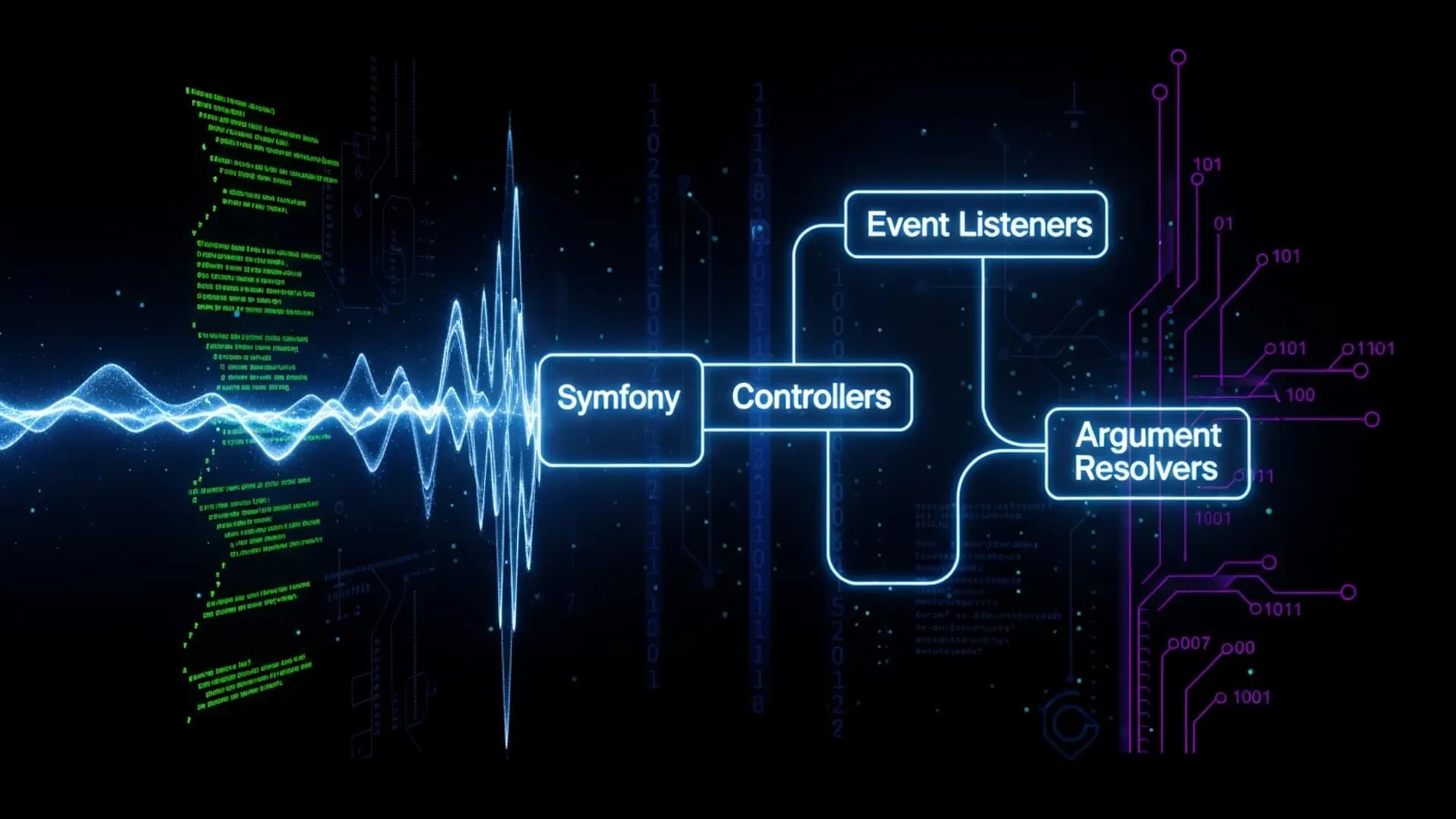
As a Symfony developer preparing for certification, understanding the component that registers and manages controller services, listeners, and compiler passes is crucial. This guide will delve into this essential topic, providing practical examples and insights for mastering Symfony development.
Exploring the Core Component
In Symfony, the component responsible for registering and managing controller services, listeners, and compiler passes is the SymfonyComponentDependencyInjectionContainerBuilder. This component plays a central role in the Symfony application's service container, handling the configuration and instantiation of services, event listeners, and compiler passes.
The ContainerBuilder is essential for defining and organizing the various components that make up a Symfony application, ensuring proper dependency injection and service management.
Controller Services Registration
When working with controller services in Symfony, the ContainerBuilder allows developers to define and register services that handle specific business logic or interact with external resources. By configuring services within the container, controllers can access these services through dependency injection, promoting modular and reusable code.
For example, a controller service responsible for processing user authentication may rely on a service that interacts with a database to validate user credentials. By registering these services with the ContainerBuilder, the controller can seamlessly access and utilize these dependencies.
Event Listeners Management
In Symfony applications, event listeners play a critical role in responding to specific events triggered during the application's lifecycle. The ContainerBuilder facilitates the registration and management of these event listeners, allowing developers to define custom logic for handling events such as authentication success, error handling, or entity lifecycle events.
By configuring event listeners within the container, developers can decouple event handling logic from the primary application flow, enhancing maintainability and extensibility. This separation of concerns promotes cleaner code architecture and facilitates easier debugging and testing.
Compiler Passes Handling
Compiler passes in Symfony provide a mechanism for modifying the container's service definitions and configurations before the container is compiled. The ContainerBuilder manages the registration and execution of compiler passes, enabling developers to perform advanced optimizations, validations, or customizations on the service container.
By leveraging compiler passes, developers can dynamically adjust service configurations based on specific conditions or requirements, enhancing the flexibility and efficiency of the Symfony application. This capability is particularly useful for integrating third-party libraries, optimizing service loading, or enforcing application-specific constraints.
Practical Examples in Symfony Applications
To illustrate the importance of the ContainerBuilder in managing controller services, listeners, and compiler passes, consider scenarios such as:
Example 1: Defining a custom service for handling user authorization logic in a Symfony controller.
Example 2: Implementing an event listener to log authentication failures in the application's security workflow.
Example 3: Utilizing a compiler pass to optimize service loading based on the application's environment.
Conclusion: Mastering Symfony Development for Certification Success
In conclusion, understanding how the ContainerBuilder registers and manages controller services, listeners, and compiler passes is essential for Symfony developers aiming to excel in the certification exam. By mastering this core component, developers can build robust and scalable Symfony applications, leveraging advanced features and best practices for efficient development.